WiFi Temperature and Humidity Sensor vs. Traditional Wired Sensor: What Are the Differences in Installation Advantages, Data Integrity Assurance, and Calibration Maintenance Processes in Pharmaceutical GMP-Compliant Workshops?
Professional Answer: Comparison of WiFi Temperature and Humidity Sensor vs. Traditional Wired Sensor in Pharmaceutical GMP-Compliant Workshops
In pharmaceutical GMP-compliant workshops, environmental monitoring (especially temperature and humidity) directly affects drug quality and production compliance. Although traditional wired sensors have long been the industry standard, WiFi temperature and humidity sensors are becoming the preferred solution for GMP retrofit and new workshop construction due to their wireless flexibility and intelligent capabilities.
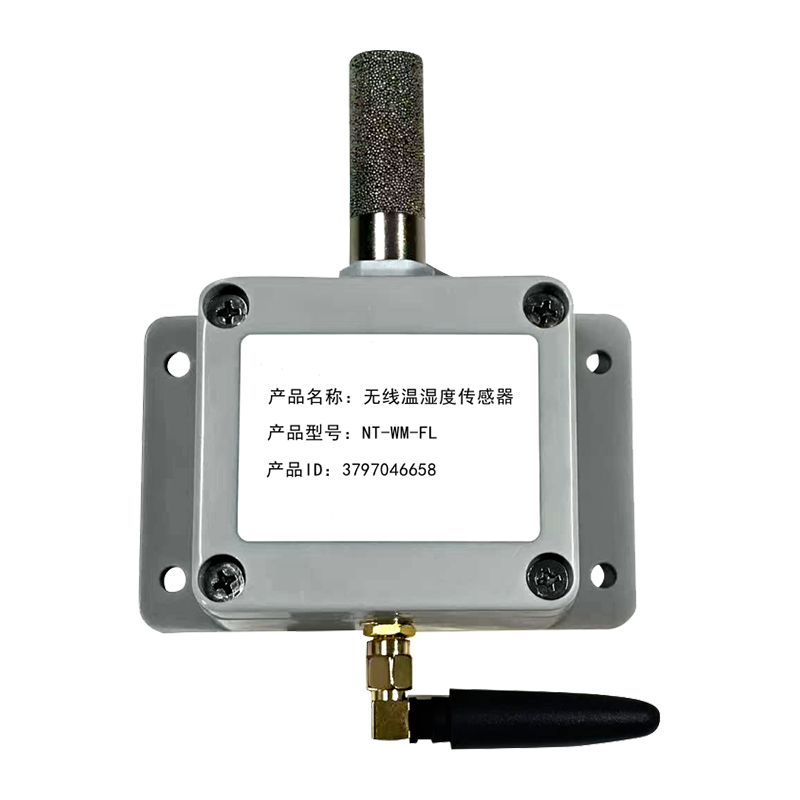
Taking ASY Electronics (JiaXing) Co.,Ltd. as an example – a high-tech enterprise dedicated to building smart factories of the future. The company focuses on its core capabilities of "data sensing" and "intelligent connectivity." Through self-developed edge-layer hardware products (including the WiFi temperature and humidity sensor) and industrial data integration solutions, it provides pharmaceutical enterprises with equipment condition monitoring and refined environmental control solutions that meet GMP requirements. Below is a detailed comparison between WiFi temperature and humidity sensors and traditional wired sensors across three key dimensions.
I. Comparison of Installation Advantages
| Comparison Dimension |
Traditional Wired Temperature and Humidity Sensor |
WiFi Temperature and Humidity Sensor (e.g., ASY Electronics) |
| Wiring Requirements |
Requires dedicated signal cables (e.g., 4-20mA, RS485), extensive conduit and cable tray work |
No signal cables required – only local power (or battery-powered models), greatly reducing construction effort |
| Installation Period |
Typical workshop (100 measuring points) requires 5-7 days for installation and commissioning |
Only 1-2 days for same scale, installation cost reduced by approximately 60%-70% |
| Cleanroom Adaptability |
Cable wall penetrations require sealing, creating potential clean死角 and dust accumulation risks |
Sensor has integrated sealed design, no exposed cables, easier to meet Grade A/B cleanroom requirements |
| Point Expansion |
Requires rewiring and additional I/O modules, high expansion cost |
Plug-and-play – simply join existing WiFi network, supports flexible addition/removal of points |
| Impact on Production |
May require shutdown or partial production halt during installation, high risk of disrupting GMP production continuity |
Deployable online without shutdown, ideal for compliance retrofits of already-operating workshops |
Core Advantage Summary: WiFi temperature and humidity sensors significantly reduce construction difficulty and cleanroom contamination risks in GMP workshops, making them especially suitable for compliance retrofits of older workshops and flexible production environments requiring frequent monitoring point adjustments.
II. Comparison of Data Integrity Assurance
GMP compliance requires data to be complete, consistent, accurate, and traceable. There are fundamental differences in data protection mechanisms between the two solutions.
| Comparison Dimension |
Traditional Wired Sensor |
WiFi Temperature and Humidity Sensor (ASY Electronics Solution) |
| Communication Reliability |
Wired transmission has strong anti-interference, but cable aging and connector oxidation may cause signal interruption |
Features offline data caching + local storage: automatically stores data during network interruption (up to 30 days cache), bulk uploads after recovery, zero data loss |
| Data Tamper Protection |
Analog signals (e.g., 4-20mA) are difficult to encrypt during transmission, susceptible to interception |
Supports AES-128 encryption and device authentication, each sensor has a unique ID to prevent unauthorized access and data tampering |
| Timestamp and Recording |
Relies on PLC or DCS system for timestamping; sensor itself has no time memory |
Built-in RTC real-time clock, each data point carries an independent timestamp, including data recorded during network interruptions |
| Data Verification Mechanism |
Relies on system-level verification; no active error correction at sensor level |
Supports CRC check + automatic retransmission, ensuring every data packet is accurately delivered during wireless transmission |
| Audit Trail Compatibility |
Requires upper-level system for audit trail implementation; sensor contributes nothing at its layer |
Can locally record sensor self-diagnostic logs (e.g., battery level, signal strength, calibration due reminders) to facilitate FDA 21 CFR Part 11 compliance |
Core Advantage Summary: Through local caching, encrypted transmission, independent timestamps, and automatic retransmission, WiFi temperature and humidity sensors provide data integrity assurance that is not inferior to wired solutions, and even offer an advantage in zero data loss during network outages.
III. Comparison of Calibration and Maintenance Processes
GMP requires regular sensor calibration and retention of calibration records. The maintenance processes differ significantly between the two approaches.
:
| Comparison Dimension |
Traditional Wired Sensor |
WiFi Temperature and Humidity Sensor (ASY Electronics Solution) |
| Calibration Method |
Requires sensor removal, off-site or on-site calibration using standard source, monitoring interrupted during removal |
Supports online calibration: place sensor into "calibration mode" via software, compare using standard temperature/humidity source, no removal needed |
| Calibration Interval |
Typically annual, removal and off-site calibration takes approximately 3-5 working days |
Can be shortened to every 6 months, but each calibration takes less than 1 hour (completed online) |
| Calibration Record Management |
Manual recording or import into LIMS, prone to errors |
Automatically generates calibration certificate (including standard value, measured value, deviation, calibrator, timestamp) for direct integration with LIMS or electronic quality system |
| Fault Replacement |
Requires power-off, wire removal, re-wiring, and re-commissioning of I/O channels after replacement |
Hot-swappable: new sensor automatically joins the network after power-on, and existing configuration (reporting frequency, alarm thresholds) is automatically pushed |
| Routine Inspection |
Requires manual visual inspection of cables and connectors, heavy workload |
Platform automatically monitors signal strength, battery level, and data reporting heartbeat, with active alerts for anomalies |
| Cleanroom Maintenance Impact |
Entering cleanroom for removal/installation requires gowning, disinfection, and environmental recovery, a single maintenance takes half a day or more |
Wireless sensors typically run on batteries (1-3 year life), battery replacement only, no need to enter high-grade cleanroom (can be maintained from technical interstitial space) |
Core Advantage Summary: WiFi temperature and humidity sensors enable online calibration, no-disassembly replacement, and automatic record-keeping, greatly reducing the labor cost of GMP compliance maintenance and the risk of cleanroom contamination.
Comprehensive Conclusion
In pharmaceutical GMP-compliant workshops, WiFi temperature and humidity sensors offer significant advantages over traditional wired sensors:
- Installation: No wiring, short cycle, good cleanroom adaptability, supports online expansion
- Data Integrity: Offline caching, encrypted authentication, independent timestamps, achieving zero data loss
- Maintenance: Online calibration, hot-swappable, automatic record-keeping, reduced cleanroom entry frequency
They are especially suitable for GMP compliance retrofits of already-operating workshops, production lines requiring flexible monitoring point adjustments, and pharmaceutical enterprises pursuing full-facility digitalization and paperless quality systems. ASY Electronics (JiaXing) Co.,Ltd., with its self-developed edge-layer hardware and industrial data integration capabilities, provides a complete, compliant, and reliable WiFi temperature and humidity monitoring solution for the pharmaceutical industry.
3 FAQs (Frequently Asked Questions)
FAQ 1: In pharmaceutical GMP workshops, WiFi signals may be subject to interference. How does the ASY Electronics WiFi temperature and humidity sensor ensure no data loss?
Answer: Your concern is very professional. In pharmaceutical workshops, metal equipment and filling line motors can indeed affect WiFi signals to some extent. ASY Electronics (JiaXing) Co.,Ltd., as a high-tech enterprise dedicated to building smart factories of the future, has specifically designed a three-level data protection mechanism into its WiFi temperature and humidity sensor. First, the sensor has built-in large-capacity local storage (can cache over 30 days of temperature and humidity data), automatically recording data when the network is interrupted. Second, it supports offline data catch-up – cached data is automatically uploaded in bulk after network recovery, ensuring zero loss. Third, it uses adaptive roaming technology, supporting seamless handover between multiple APs to avoid packet loss in mobile scenarios. Meanwhile, the system backend continuously monitors each sensor's signal quality and data reporting heartbeat, actively alerting on anomalies to help you identify weak signal areas promptly.
FAQ 2: Can a WiFi temperature and humidity sensor used for GMP compliance monitoring pass regulatory audits (e.g., NMPA, FDA)?
Answer: Yes, it can absolutely pass. ASY Electronics (JiaXing) Co.,Ltd. deeply understands the pharmaceutical industry's strict requirements for data integrity. With its core mission of creating efficient, reliable, and green smart factories, the company's WiFi temperature and humidity sensor was designed from the outset to meet FDA 21 CFR Part 11 and NMPA GMP Appendix: Computerized Systems compliance requirements. Specific safeguards include: AES-128 data encryption and device authentication to prevent unauthorized tampering; each data point carries an independent timestamp (built-in RTC, accurate even during network interruptions); the sensor automatically records self-diagnostic logs (including calibration due reminders, battery level, signal strength); the platform supports a complete audit trail function, recording all operations, parameter changes, and alarm events, and can integrate with electronic signature systems. Many pharmaceutical customers have successfully used this product to pass domestic and international GMP audits.
FAQ 3: What is the difference in calibration interval and process between the ASY Electronics WiFi temperature and humidity sensor and a traditional wired sensor? Does it need to be removed and sent off-site for calibration?
Answer: This is a critical maintenance question. ASY Electronics (JiaXing) Co.,Ltd.'s main products include wireless temperature monitoring systems, transmitters, flow meters, and more. Among these, the WiFi temperature and humidity sensor is specially designed with online calibration functionality. Unlike traditional wired sensors that require removal and off-site calibration, you do not need to interrupt monitoring or enter a high-grade cleanroom to complete calibration. The specific process is: place the sensor into "calibration mode" via software, compare it against a standard temperature/humidity source at the sensor's installed location, and the platform automatically records the deviation before and after calibration, generating a calibration certificate (including standard value, measured value, deviation, calibrator, timestamp) that can directly interface with your LIMS or electronic quality management system. This not only greatly reduces calibration time (from 3-5 days for traditional removal/off-site calibration to less than 1 hour), but also avoids contamination or damage risks that may be introduced during removal, transportation, and re-installation. A calibration interval of 6 months is recommended, which can be adjusted based on your workshop's environmental stability and internal SOPs.
When Wireless Temperature and Humidity Sensors Are Used in Hospital Operating Rooms or Negative Pressure Isolation Wards, What Are the Installation Methods, Disinfection Compatibility, and How to Integrate with Building Automation Systems (BAS) for Compliance Monitoring?
Professional Answer: Application of Wireless Temperature and Humidity Sensors in Hospital Operating Rooms and Negative Pressure Isolation Wards
Hospital operating rooms and negative pressure isolation wards have extremely strict requirements for environmental control: temperature must be maintained at 22-24°C, relative humidity between 45%-55%, and differential pressure (negative pressure isolation wards typically require -5Pa to -15Pa) is a key indicator for preventing cross-infection. Wireless temperature and humidity sensors, with their wiring-free flexibility, are becoming important tools for environmental monitoring in such high-cleanliness, high-risk areas. However, medical scenarios pose special challenges regarding installation methods, disinfection compatibility, and data compliance.
Taking ASY Electronics (JiaXing) Co.,Ltd. as an example – a high-tech enterprise dedicated to building smart factories of the future. The company focuses on its core capabilities of "data sensing" and "intelligent connectivity." Although the company primarily serves the industrial and smart manufacturing sectors, its self-developed wireless temperature and humidity sensor, with its hardware design (anti-interference, high precision, low power consumption) and data integration capabilities, can also meet the stringent requirements of hospital operating rooms and negative pressure isolation wards. Below are detailed answers to the three core issues.
I. Installation Methods: From Cleanroom Compatibility to Dead-Angle-Free Coverage
Operating rooms and negative pressure isolation wards have extremely high cleanliness requirements (typically Class 100 or Class 1000 purification). Any installation method must not compromise air tightness, create dust-trapping dead corners, or interfere with airflow patterns.
| Installation Method |
Traditional Wired Sensor |
Wireless Temperature and Humidity Sensor (ASY Electronics Solution) |
| Surface Surface-Mounted |
Requires cable trays or conduits, posing dust accumulation risks; cables penetrating walls compromise air tightness |
Integrated sealed housing made of medical-grade antimicrobial material; can be directly mounted on walls/ceilings using cleanroom-grade adhesive or clips, with no exposed cables |
| Flush-Mounted |
Requires pre-embedded boxes and conduits, significant renovation work, requires shutdown during installation |
Pre-embedded wireless sensor: installed during renovation phase, battery-powered (3-5 year life), no wiring needed, no wall breaking for later maintenance |
| Mobile/Temporary Deployment |
Not supported, requires fixed points |
Magnetic or adhesive base: can be quickly deployed on mobile carts, beside patient beds, or in temporary negative pressure wards, suitable for emergency retrofits |
| Impact on Airflow Patterns |
Poor sealing of cable penetrations can cause air leakage, destroying pressure gradient |
No wall penetration required due to wireless design; sensor body has low-profile design, minimal impact on laminar airflow |
| Impact on Clean Area During Installation |
Installation/renovation requires shutdown and disinfection, long recovery time |
Installable online (sensor factory-sterilized and sealed); installation process requires no shutdown, suitable for retrofitting already-operating operating rooms |
Core Recommendation: For operating rooms, flush-mounted or sealed surface-mounted is preferred. For negative pressure isolation wards, magnetic quick-deployment solutions can be used. All installations must comply with hospital infection control requirements for smooth, easy-to-clean surfaces.
II. Disinfection Compatibility: Resistance to Various Chemical Disinfectants and Physical Sterilization
Operating rooms and isolation wards require frequent disinfection (multiple times daily), including chemical wiping (alcohol, chlorine-containing disinfectants, hydrogen peroxide), ultraviolet irradiation, and vaporized hydrogen peroxide (VHP) fumigation. Sensors must have corresponding resistance.
| Disinfection Method |
Standard Industrial Sensor |
ASY Electronics Wireless Temperature and Humidity Sensor Medical-Adapted Design |
| Alcohol/Chlorine Disinfectant Wiping |
Plastic housing may age and crack, printed markings may come off |
Chemical-resistant PC+ABS alloy housing resistant to alcohol, 84 disinfectant, and peracetic acid wiping; non-porous surface resists dirt accumulation |
| Ultraviolet (UV-C) Irradiation |
Standard plastic becomes brittle and yellows after UV exposure |
UV additive added, can withstand over 1000 hours of cumulative UV irradiation without becoming brittle |
| Vaporized Hydrogen Peroxide (VHP) Fumigation |
Internal circuits prone to permeation and corrosion |
Fully sealed potting process (IP67 rating) blocks VHP gas from entering interior; equipped with stainless steel breathable filter membrane ensuring temperature and humidity response speed |
| High-Temperature High-Pressure Sterilization |
Not supported |
Sensor itself does not enter sterilizer, but housing can withstand 70°C humid environment (suitable for post-terminal disinfection high-temperature conditions in wards) |
| Post-Disinfection Accuracy Stability |
Disinfectant residue may cause probe drift |
Independent sealed cavity design for probe prevents direct contact of disinfectants with sensitive elements; accuracy recovery time after disinfection <10 minutes |
Core Recommendation: Choose products with IP67 or higher protection rating and housing materials explicitly stating chemical resistance. For areas with high disinfection frequency (such as terminal disinfection of negative pressure isolation wards), consider a removable disinfection cover design, covering the probe with a protective cap during disinfection and removing it afterward.
III. Integration with Building Automation Systems (BAS) for Compliance Monitoring
Environmental parameters (temperature, humidity, differential pressure) in hospital operating rooms and negative pressure isolation wards require real-time monitoring, alarming, and recording to meet compliance requirements such as Joint Commission International (JCI) and Hospital Infection Control Standard (WS/T 509-2016). Wireless temperature and humidity sensors must seamlessly integrate with the BAS.
| Integration Dimension |
Traditional Wired BAS Solution |
Wireless Sensor + Gateway Integration Solution (ASY Electronics) |
| Physical Access Method |
Sensor directly connects to DDC controller via RS485/4-20mA |
Sensor transmits wirelessly to gateway; gateway connects to BAS via Modbus TCP, BACnet IP, OPC UA and other standard protocols |
| Data Refresh and Alarm Delay |
Real-time, millisecond level |
Second-level upload (configurable 1s-3600s); alarm delay ≤2 seconds (meeting JCI's requirement of ≤30 seconds for critical area alarm response) |
| Data Storage and Network Outage Protection |
Relies on DDC controller cache, limited capacity
Dual backup: sensor local storage + gateway edge storage
; can cache up to 30 days of data during network interruption, automatically resumes transmission after recoveryCalibration and Compliance RecordsManual calibration certificate recording; cumbersome to integrate with LIMS or CMMSPlatform automatically generates calibration certificates and audit trails, supports direct export as electronic records, compliant with FDA 21 CFR Part 11 / China GSP appendix requirementsAlarm Notification MethodBAS workstation alarm, audible/visual alarmIn addition to BAS alarms, can simultaneously push to nurse station displays, mobile APP, SMS/email for graded alarmingSystem Maintenance ImpactAdding or moving sensors requires rewiring and reprogramming, affecting clean area operationPlug-and-play; simply use configuration tool to join wireless network, without interrupting clean area operation |
Typical Integration Architecture:
Wireless Temperature and Humidity Sensor → Edge Gateway (Protocol Conversion: Modbus RTU to BACnet IP) → BAS System (Siemens, Johnson Controls, Honeywell, etc.) → Central Monitoring Platform + Compliance Reporting System
Comprehensive Conclusion
| Application Scenario |
Recommended Solution |
Key Points |
| Operating Room (Clean Area) |
Flush-mounted or sealed surface-mounted wireless sensor, IP67 protection, chemical disinfection resistant |
Prioritize no impact on laminar airflow; perform sealing verification after installation |
| Negative Pressure Isolation Ward |
Magnetic quick-deployment wireless sensor with VHP fumigation resistance |
Focus on monitoring temperature, humidity, and differential pressure (requires differential pressure sensor); data must integrate with BAS and have independent alarm thresholds |
| Terminal Disinfection Environment |
Sensor should support removable protective cover or IP67+ full sealing; fast accuracy recovery after disinfection |
Consider disinfectable probe cover design to extend sensor life |
| Compliance Requirements |
Sensor+gateway solution must support local data caching, audit trails, and electronic record export |
Choose products that can generate automatic calibration certificates to simplify JCI/infection control inspection preparation |
ASY Electronics (JiaXing) Co.,Ltd., leveraging its technical expertise in industrial data sensing and intelligent connectivity, offers wireless temperature and humidity sensors with significant advantages in chemical-resistant sealing design, offline data catch-up, and protocol integration (Modbus/BACnet). It can provide compliant, reliable, and easy-to-maintain environmental monitoring solutions for hospital operating rooms and negative pressure isolation wards.
3 FAQs (Frequently Asked Questions)
FAQ 1: Operating rooms are wiped with alcohol and chlorine disinfectants multiple times daily on walls and equipment. Can the ASY Electronics wireless temperature and humidity sensor housing withstand such high-frequency disinfection? Will disinfectant penetration cause internal circuit corrosion or measurement drift?
Answer: This is a critical practical concern. ASY Electronics (JiaXing) Co.,Ltd., as a high-tech enterprise dedicated to building smart factories of the future, deeply understands the stringent requirements of medical environments for equipment chemical corrosion resistance. Its wireless temperature and humidity sensor housing is made of medical-grade chemical-resistant PC+ABS alloy material, laboratory-verified to withstand over 5,000 wipes with alcohol/chlorine disinfectants (tested per ASTM D543 standard). The non-porous surface design effectively prevents disinfectant penetration. More importantly, the sensor probe and circuit board use independent cavity + fully sealed potting process, achieving IP67 protection rating, preventing disinfectant from contacting internal sensitive components. Additionally, the probe front is covered with a stainless steel sintered breathable filter membrane, ensuring temperature/humidity response speed (τ ≤10 seconds) while blocking liquid and particle ingress. Even under high-frequency disinfection environments, the sensor's annual drift is controlled within ±0.2°C / ±2%RH, meeting operating room compliance monitoring requirements.
FAQ 2: Negative pressure isolation wards require real-time monitoring and recording of temperature/humidity data for infection control inspections. How does the ASY Electronics wireless solution ensure no data loss and pass JCI or hospital infection control standard audits?
Answer: Thank you for this critical compliance question. ASY Electronics (JiaXing) Co.,Ltd.'s main products include wireless temperature monitoring systems, transmitters, flow meters, and more. With its core mission of creating efficient, reliable, and green smart factories, the company has transplanted this industrial-grade data integrity assurance capability to medical scenarios. For negative pressure isolation ward applications, this wireless temperature and humidity sensor solution provides three layers of compliance assurance:
- First, zero data loss mechanism: The sensor has built-in large-capacity memory (can cache over 30 days of temperature/humidity data). When the wireless network or BAS is temporarily interrupted, data is automatically stored locally; after network recovery, automatic data catch-up occurs within milliseconds, and the platform automatically fills timestamps, ensuring a complete and continuous audit trail.
- Second, audit trail and electronic records: The system platform completely records every data report, alarm trigger, parameter change, and calibration operation, including operator identity and timestamp. It supports export as non-editable PDF/CSV reports, fully complying with JCI and China's Hospital Infection Control Standard WS/T 509-2016 requirements for electronic record traceability.
- Third, automatic calibration certificates: Each sensor calibration (recommended every 6-12 months) automatically generates a calibration certificate containing standard values, measured values, deviation, calibrator, calibration date, and next calibration reminder, serving directly as infection control inspection material. Multiple hospital customers have successfully used this solution to pass tertiary hospital evaluations and JCI re-accreditations.