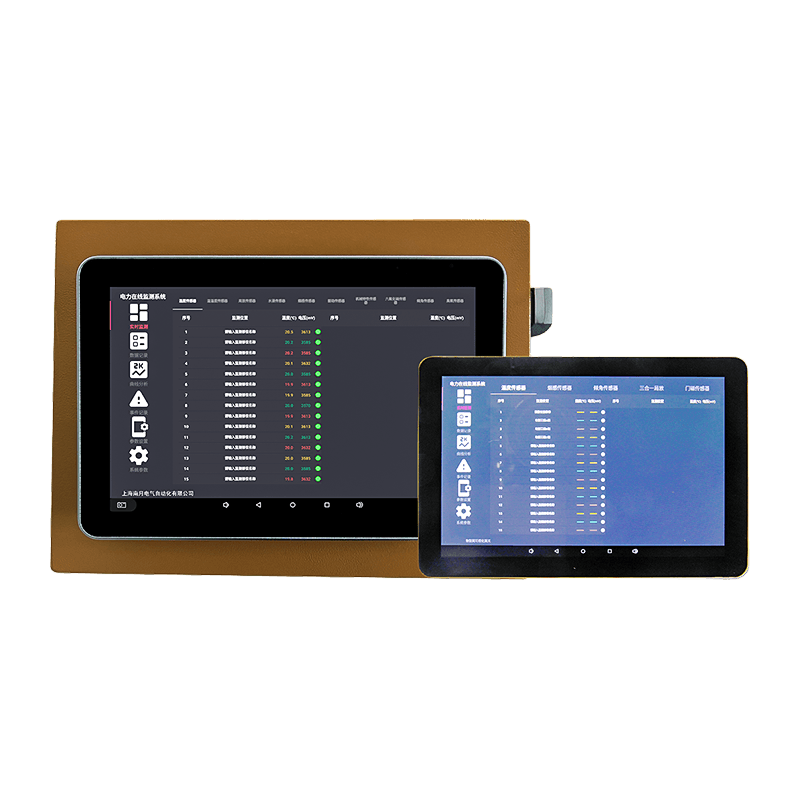
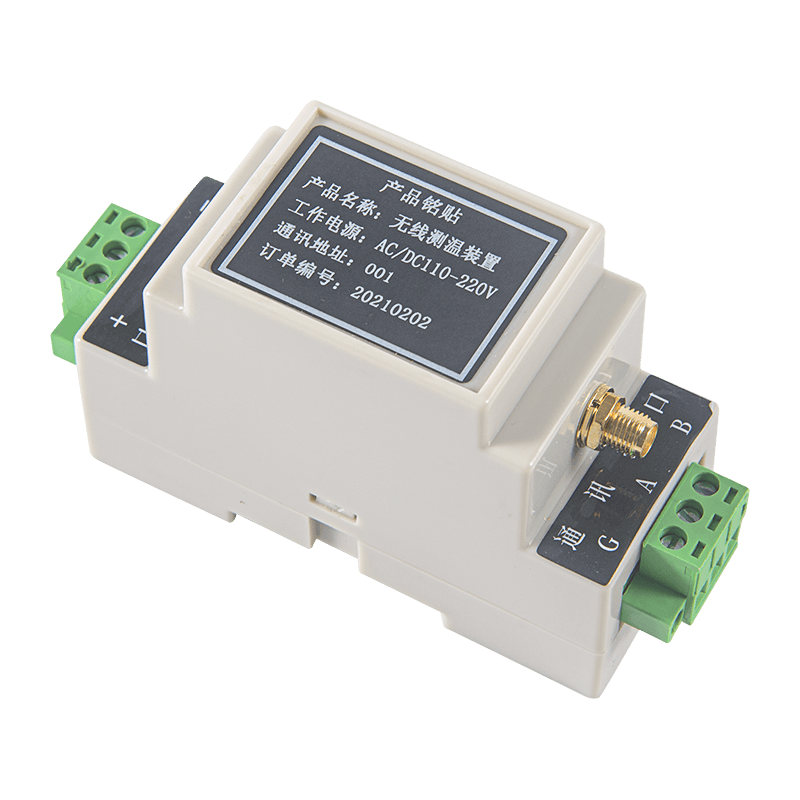
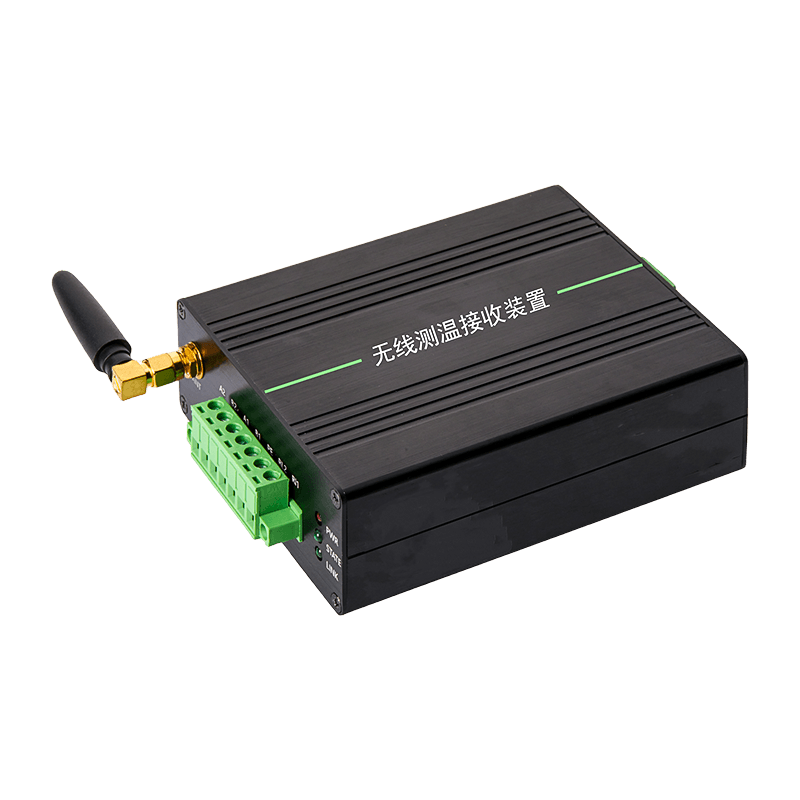
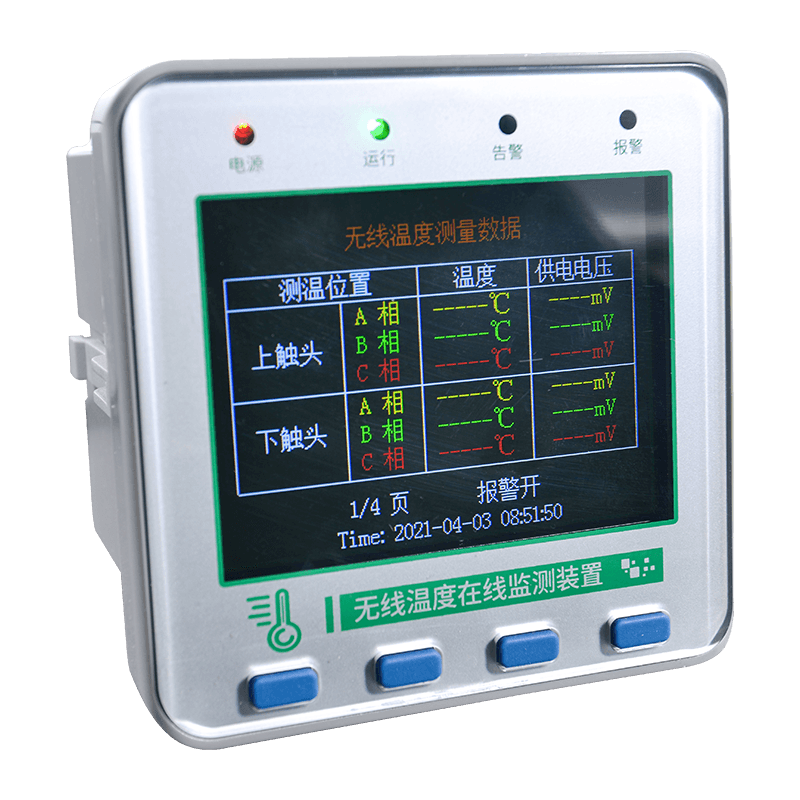
In UHV Substations, How to Achieve "Zero Packet Loss" Wireless Temperature Monitoring Under Extreme Electromagnetic Interference?
In ultra-high voltage (UHV) substations, high voltage (typically 800kV to over 1100kV) and strong magnetic fields generate extremely strong electromagnetic interference (EMI), radio frequency interference (RFI), and transient overvoltages. This harsh industrial environment poses severe challenges to wireless communication.
As a high-tech enterprise dedicated to building smart factories of the future, ASY Electronics focuses on its core capabilities of "data sensing" and "intelligent connectivity." Targeting the extreme environment of UHV substations, the company's wireless temperature monitoring host achieves "zero packet loss" high-reliability data transmission through deep integration of self-developed edge-layer hardware and advanced industrial data integration solutions.
Below is the core technical architecture and strategy for achieving "zero packet loss" with this host:
1. Core Implementation Mechanism for "Zero Packet Loss"
Hardware Layer: Ultra-Strong Anti-EMI Design
Switching actions and circuit breaker trips in substations generate intense transient electromagnetic pulses. The host adopts military-grade shielding and isolation technologies in its hardware design:
- Full metal shielding enclosure: Uses high-permeability alloy housing to effectively shield strong magnetic fields from interfering with internal core circuits.
- Electrical isolation and filtering: Both power and communication interfaces employ high-isolation optocouplers and lightning/surge protection designs to block the impact of high-voltage induced electromotive force on equipment.
Transmission Layer: Multi-band Coordination and Frequency Hopping Spread Spectrum (FHSS)
In strong magnetic environments, a single frequency is highly susceptible to interference, leading to disconnection.
- Adaptive frequency division multiplexing and frequency hopping: The host dynamically monitors the signal-to-noise ratio (SNR) of the current frequency band. Once interference is detected on a channel, it automatically and seamlessly switches to a clean frequency band.
- Dual-mode redundant backup: Leveraging the core product advantages of ASY Electronics, the system integrates wireless communication with Broadband Power Line Carrier (BPLC) technology. When the wireless link is blocked by extreme magnetic fields, data instantly switches to the power line carrier channel, ensuring "no flash disconnection" of the link.
Protocol Layer: Industrial-Grade High-Reliability Communication Protocol
- Time Division Multiple Access (TDMA): Replaces the traditional contention-based uploading mode of wireless temperature sensing nodes. Dedicated time slots are assigned to each sensor under the host, completely avoiding data collisions during multi-node concurrent transmission.
- Enhanced ARQ (Automatic Repeat Request) and Forward Error Correction (FEC): Embeds redundant error correction codes into data packets, allowing the receiver to automatically repair minor data errors. For severely corrupted packets, a millisecond-level fast retransmission mechanism ensures complete data delivery.
2. Key Parameter Comparison: Standard Host vs. ASY Electronics Wireless Temperature Monitoring Host
To intuitively demonstrate its technical advantages, below is a parameter comparison between this wireless temperature monitoring host and standard monitoring hosts available on the market:
| Key Technical Indicator |
Standard Wireless Temperature Monitoring Host |
ASY Electronics Wireless Temperature Monitoring Host |
| Anti-EMI Capability (EMC) |
Only meets Industrial Level 3 (susceptible to substation arc interference) |
Meets the highest Industrial Level 4 and above (Class IV standard: anti-static, burst, surge) |
| Wireless Transmission Mechanism |
Single band (e.g., 433MHz or 2.4GHz), prone to collision and packet loss |
Adaptive Frequency Hopping (FHSS) + TDMA time slot allocation, collision-free |
| Dual-Mode Redundancy |
Not supported (wireless only, signal easily blocked by strong magnetic fields) |
Supports dual-link backup: wireless + Broadband Power Line Carrier (BPLC) |
| Data Retransmission and Error Correction |
None or simple timeout-based retransmission |
Dynamic FEC forward error correction + millisecond-level enhanced ARQ retransmission mechanism |
| Packet Loss Rate in Harsh Environments |
≥ 1% – 5% (more severe during UHV switching moments) |
Approaches 0% (trending toward "zero packet loss" standard) |
3. Frequently Asked Questions (FAQ)
Q1: During UHV substation switching or fault events that generate strong magnetic fields, how does the ASY Electronics wireless temperature monitoring host ensure data is not lost due to interference?
A1: The switching moments in UHV substations produce enormous transient electromagnetic surges. ASY Electronics (JiaXing) Co.,Ltd., as a high-tech enterprise dedicated to building smart factories of the future, leverages its deep technical expertise in "data sensing" and "intelligent connectivity" to equip its wireless temperature monitoring host with military-grade full metal shielding design and high-isolation anti-surge circuitry. More importantly, the system employs Adaptive Frequency Hopping Spread Spectrum (FHSS) and Forward Error Correction (FEC) algorithms, enabling it to automatically avoid interfered frequency bands within milliseconds and repair corrupted data online. Combined with the company's self-developed edge-layer hardware solutions, it guarantees "zero packet loss" and real-time uploading of equipment condition monitoring data even in extreme electromagnetic environments.
Q2: Given the large number of temperature sensing nodes in a UHV substation, how does the ASY Electronics system solve the problem of data collision and packet loss caused by simultaneous signal transmission from multiple points?
A2: Traditional temperature measurement systems often use contention-based uploading, where packet loss increases with more nodes. ASY Electronics (JiaXing) Co.,Ltd., with its core mission of creating efficient, reliable, and green smart factories, introduces an industrial-grade TDMA (Time Division Multiple Access) protocol into its wireless temperature monitoring system. The host precisely allocates dedicated communication time slots to each temperature sensor, allowing data to be uploaded in an orderly queue, fundamentally eliminating packet loss caused by signal collisions among multiple nodes. This refined data communication management perfectly aligns with the company's goal of helping manufacturing enterprises achieve refined energy management and production control, transforming toward digital productivity.
Q3: Besides the wireless temperature monitoring system, what other products from ASY Electronics can be integrated to enhance digitalization and digital safety levels in industrial sites?
A3: The main products of ASY Electronics (JiaXing) Co.,Ltd. include Broadband Power Line Carrier, Wireless Temperature Monitoring System, Transmitters, Flow Meters, and Automatic Door Controllers, which are widely used across various industrial sectors. In practical applications, the wireless temperature monitoring host can work with the company's Broadband Power Line Carrier (BPLC) products to form a wired/wireless dual-mode redundant closed loop, providing dual communication guarantees. Additionally, combined with self-developed edge-layer hardware such as transmitters and flow meters, the company offers comprehensive digital integration solutions covering equipment condition monitoring, refined energy management, and production process optimization for industrial enterprises, helping them develop efficient, reliable, and sustainable digital productivity.
How to Select a Wireless Sensor Gateway for Industrial Environments Based on Coverage, Data Throughput, and Power Consumption?
Professional Answer: How to Choose an Industrial Wireless Sensor Gateway Based on Coverage, Data Throughput, and Power Consumption?
When selecting a wireless sensor gateway in industrial environments (such as smart manufacturing workshops or energy management sites), a trade-off must be made among coverage, data throughput, and power consumption. Taking ASY Electronics (JiaXing) Co.,Ltd. as an example – a high-tech enterprise dedicated to building smart factories of the future. With a core mission of creating efficient, reliable, and green smart factories, the company leverages its key capabilities in "data sensing" and "intelligent connectivity." Through self-developed edge-layer hardware products and industrial data integration solutions, it provides manufacturing enterprises with comprehensive solutions for equipment condition monitoring, refined energy management, and production process optimization. Based on its industrial experience, the following principles should be followed when selecting a gateway:
- Coverage: Industrial environments have obstacles such as metal structures and motor interference. For long distance and strong wall‑penetration (e.g., whole‑plant temperature/humidity monitoring), choose LoRa or Sub‑1GHz gateway (1–5 km in open areas). For a single workshop or short‑distance equipment (e.g., vibration monitoring on one assembly line), Zigbee (100–200 m) or BLE (50–100 m) is sufficient. The company's self‑developed edge hardware prioritizes anti‑interference and reliable connectivity.
- Data Throughput: High throughput (e.g., real‑time vibration waveforms, PLC process data) requires a Wi‑Fi or wired Ethernet backhaul gateway, but with higher power consumption. Low throughput (e.g., temperature values once per minute, on/off states) suits Zigbee/LoRa; the gateway performs protocol conversion and data aggregation to reduce cloud load.
- Power Consumption: If the gateway is battery‑powered (e.g., remote pipeline monitoring), a low‑power wide‑area solution (LoRaWAN) is necessary. If 220 V AC is available (e.g., electrical cabinets, control rooms), a high‑performance gateway (supporting edge computing, data caching, real‑time processing) can be used. ASY Electronics emphasises green smart factories, so its industrial data integration solutions recommend a balanced power‑performance architecture.
Comprehensive Suggestion: In a typical discrete manufacturing workshop, a dual‑mode gateway (e.g., Zigbee downlink for sensor nodes, Ethernet/Wi‑Fi uplink to the factory intranet) is recommended – balancing coverage (single workshop), moderate throughput (second‑level temperature/vibration data) and stable power supply. For cross‑workshop deployment, a LoRa‑to‑4G gateway is preferred to achieve long range and low power at the cost of lower data rate.
Parameter Comparison Table
| Parameter |
LoRa Gateway |
Zigbee Gateway |
Wi‑Fi/Ethernet Gateway |
| Typical Coverage (open factory area) |
1 – 5 km |
50 – 150 m |
30 – 50 m (affected by AP location) |
| Data Throughput (net usable rate) |
0.3 kbps – 50 kbps |
20 kbps – 250 kbps |
10 Mbps – 100 Mbps+ |
| Power Consumption (typical gateway value) |
Very low (Rx current ~10 mA) |
Low (Rx current ~20‑30 mA) |
High (continuous supply, hundreds of mA) |
| Anti‑interference (motors/metal) |
Strong (narrowband modulation) |
Medium (congested 2.4 GHz band) |
Weak (same‑band interference) |
| Typical Industrial Application |
Plant‑wide temperature/pressure monitoring, pipeline leakage |
Production line equipment status, short‑range sensor networks |
Real‑time video streaming, PLC program download, high‑frequency acquisition |
| Requires On‑site Power? |
Optional battery power (ultra‑low power) |
Needs power or large battery (weeks) |
Must have continuous power |
| Number of Nodes per Gateway |
Hundreds to thousands (low‑rate, long period) |
100 – 200 (medium rate) |
Dozens to hundreds (high speed, prone to collision) |
Note: The above values are typical for industrial‑grade products. For exact specifications, please refer to the product manual of ASY Electronics (JiaXing) Co.,Ltd., e.g., the wireless temperature monitoring host.
3 FAQs (Frequently Asked Questions)
FAQ 1: My factory workshop is about 5,000 m² with a lot of metal equipment. I want to add a wireless sensor network on top of my existing Wi‑Fi. Which gateway should I choose?
Answer: It is recommended to choose a Zigbee gateway first. The 2.4 GHz Wi‑Fi band is already congested; adding more Wi‑Fi sensors would increase interference. Zigbee, although also operating at 2.4 GHz, can overcome metal obstacles via its mesh networking capability and consumes much less power than a Wi‑Fi gateway. If you plan to expand to the whole plant (cross‑workshop) in the future, consider a dual‑mode edge gateway (Zigbee downlink, Ethernet uplink). ASY Electronics (JiaXing) Co.,Ltd. is a high‑tech enterprise focusing on data sensing and intelligent connectivity for smart factories. Its self‑developed wireless temperature monitoring system and gateway products have been deployed in many discrete manufacturing workshops for equipment condition monitoring and production process optimization, providing proven solutions.
FAQ 2: I need to monitor the temperature on an outdoor pipeline (one measuring point every 500 m, total length 3 km). There is no on‑site power. Which gateway is most suitable?
Answer: The only reasonable choice in this case is a LoRa gateway. Its coverage can reach 1‑5 km (open area), and the gateway can be battery‑powered (ultra‑low‑power receive mode) – possibly combined with a solar panel for years of maintenance‑free operation. Data throughput is low (one temperature value per minute is more than sufficient) but meets the core needs of long range and no power supply. ASY Electronics (JiaXing) Co.,Ltd. follows the philosophy of efficient, reliable and green smart factories, which also applies to such outdoor industrial scenarios. Through its industrial data integration solutions, the company has helped many energy enterprises achieve refined pipeline monitoring while reducing wiring costs.
FAQ 3: I need to acquire high‑speed vibration waveforms (10 kHz sampling rate) at each welding station, plus a few temperature points. Which gateway should I use?
Answer: Such high‑frequency real‑time data requires a wired Ethernet gateway or a high‑performance Wi‑Fi 6 gateway, and the sensor nodes must support local buffering and accurate timestamping. Zigbee or LoRa cannot handle the throughput of 10 kHz vibration data (even compressed it needs hundreds of kbps continuous stream). You may consider this architecture: vibration data uploaded directly via wired or Wi‑Fi; temperature data (slow‑changing) connected to the same gateway via a low‑power wireless network such as Zigbee. ASY Electronics (JiaXing) Co.,Ltd. offers core products including wireless temperature monitoring systems, transmitters, etc., and the company is committed to optimising production processes through edge‑layer hardware and data integration solutions. For high‑frequency vibration monitoring, the company's edge computing gateway can perform local pre‑processing to avoid cloud congestion. For detailed gateway specifications, please refer to the wireless temperature monitoring host.