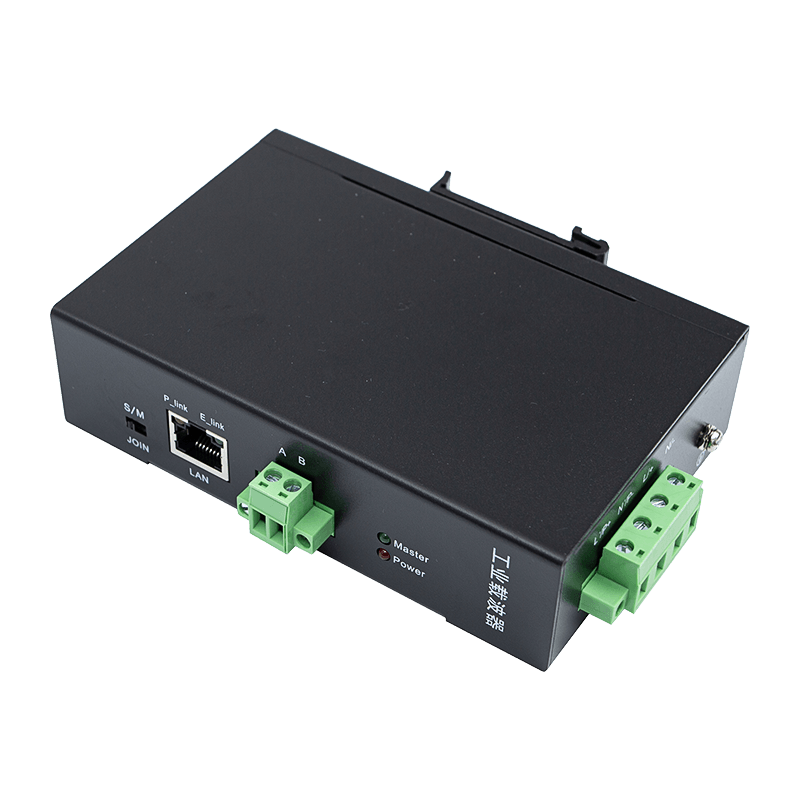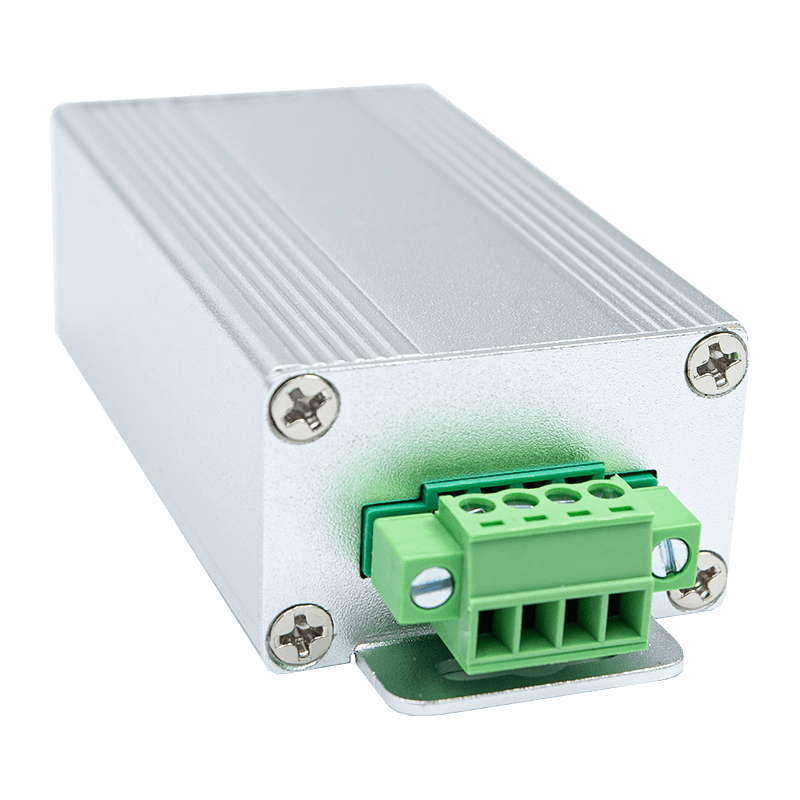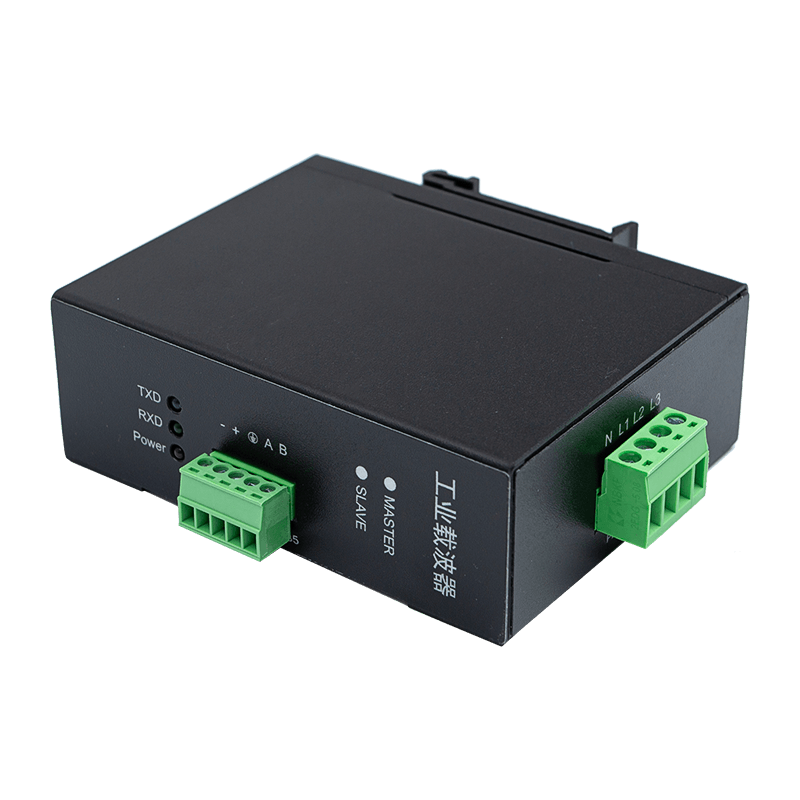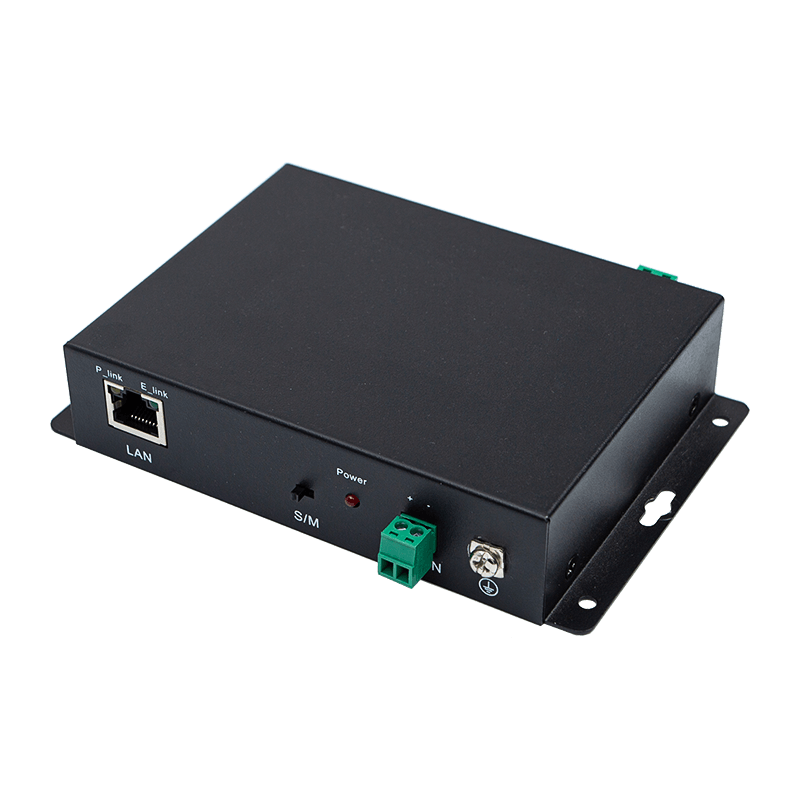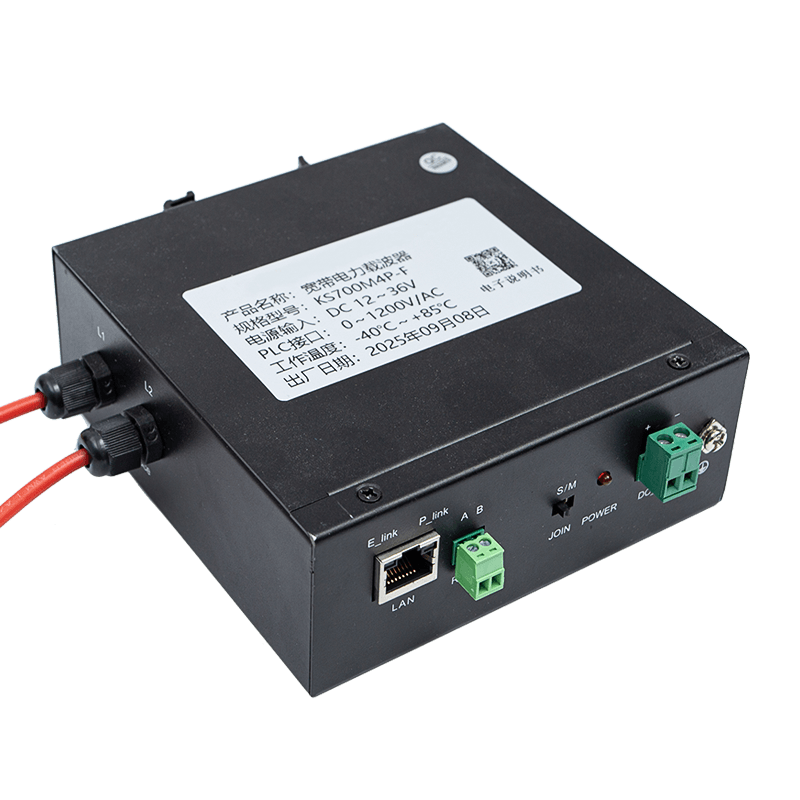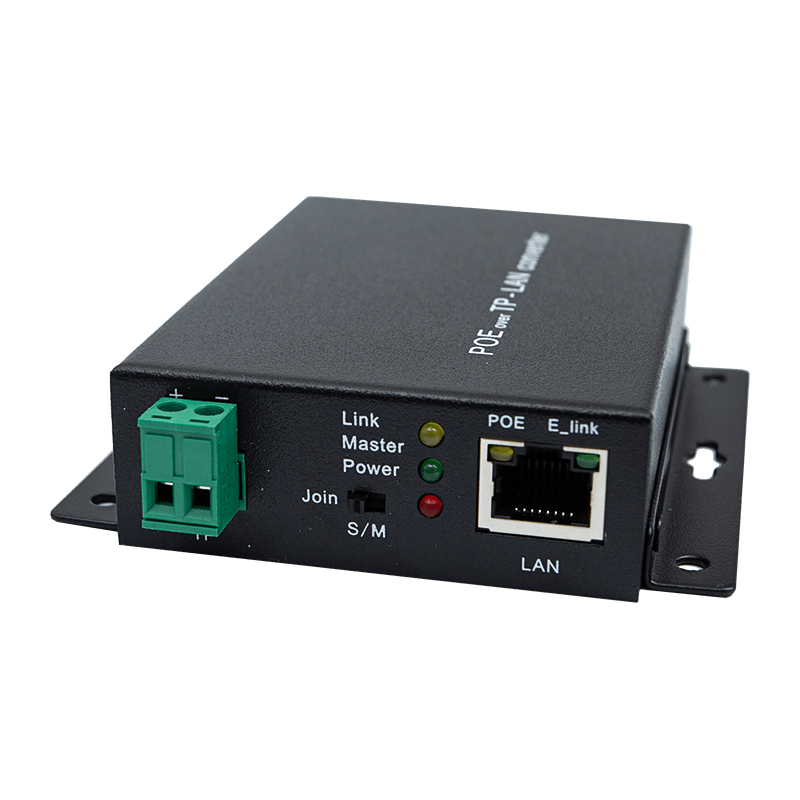


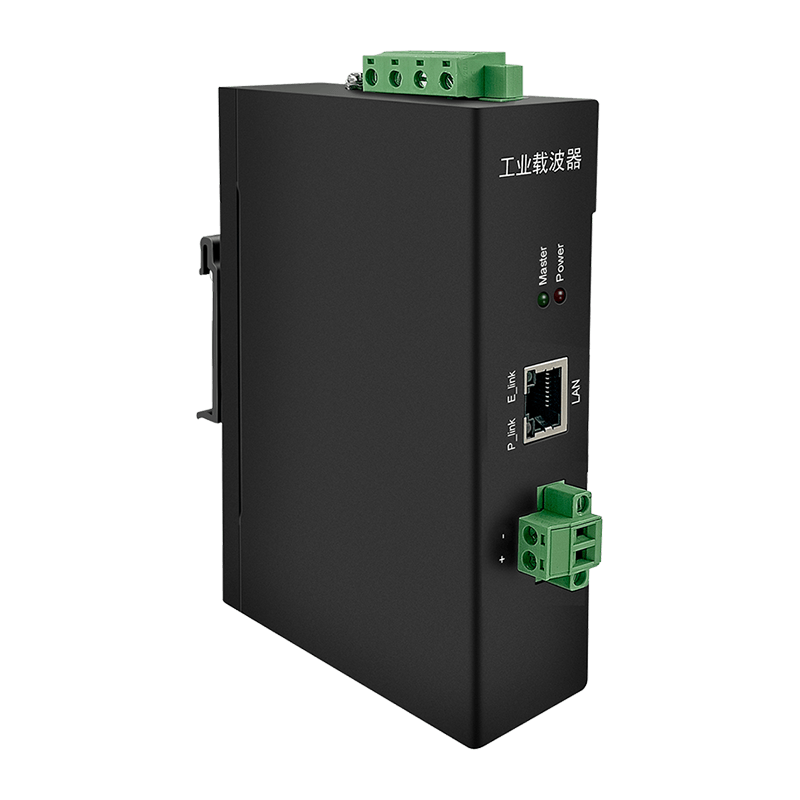
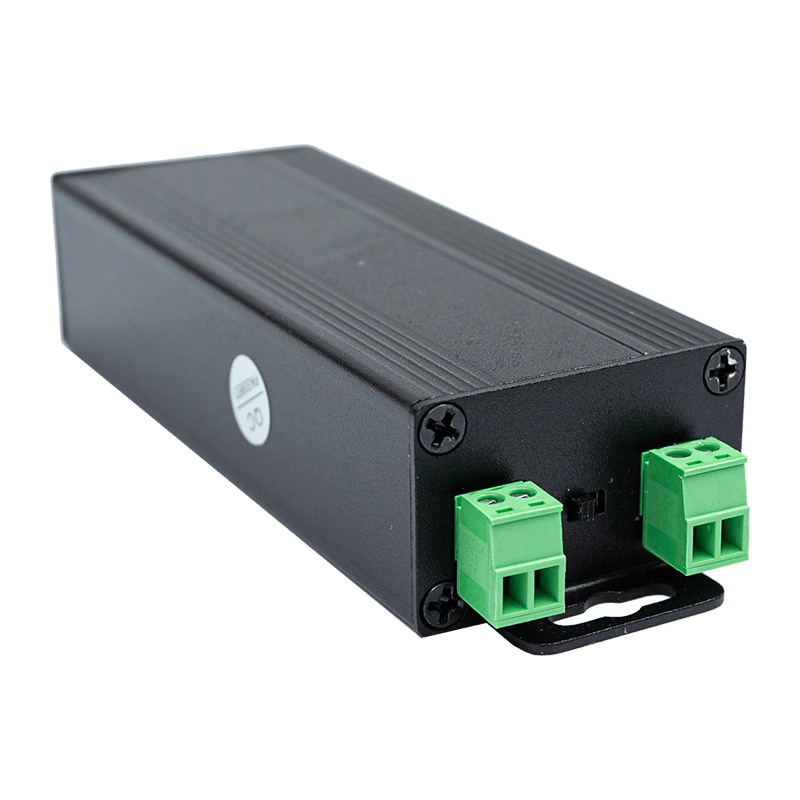
A plant engineer needed sub-metering on a 220 m feeder running through three workshops. The conduit was full, the fiber quote was three weeks out, and the power cable was already in place. Power line communication looked like the shortcut, until the vendor asked one question: does this link carry a 15-minute energy counter, or a live vibration waveform?
That question is the broadband PLC vs narrowband PLC decision in miniature. Narrowband trades speed for reach and noise tolerance. Broadband trades reach for speed.
The short answer: choose narrowband PLC when you need up to a few hundred kbit/s across hundreds of metres to several kilometres of existing power wiring, and the data is counters, status bits or slow telemetry. Choose broadband PLC when you need megabits, tens of milliseconds of latency, or many nodes streaming at once, and the feeder is short and quiet enough for a wideband signal.
Broadband PLC vs Narrowband PLC at a Glance
Only a few parameters change a wiring or hardware decision. This is the comparison we hand out before a site survey.
| Parameter | Narrowband PLC | Broadband PLC |
|---|---|---|
| Frequency band | 3 kHz to 500 kHz | 1.8 MHz to 86 MHz, most products 2 MHz to 30 MHz |
| Data rate | A few hundred bit/s to a few hundred kbit/s | 1 Mbit/s to tens of Mbit/s on clean short runs |
| Reach per segment | Up to several kilometres of low-voltage feeder | Typically 100 m to 300 m without repeaters |
| Modulation | FSK, S-FSK, BPSK, narrowband OFDM in G3-PLC, PRIME and IEEE 1901.2 | OFDM or wavelet OFDM with adaptive bit loading, as in IEEE 1901 and HD-PLC |
| Latency | Around 100 ms to several seconds | Tens of milliseconds |
| Noise behaviour | Survives narrowband interferers, fails if one sits on its carrier | Notches bad subcarriers, still collects wideband noise |
| Typical jobs | Metering, telemetry, status polling, PLC telephony | Sensor streaming, camera backhaul, fast aggregation |
Reach and noise behaviour explain most of the rest.
Why the Frequency Band Decides Everything Else
Narrowband: a thin slice of spectrum
Narrowband PLC keeps carriers inside 3 kHz to 500 kHz, split by region: CENELEC A (35 kHz to 91 kHz) in Europe, the FCC band (10 kHz to 490 kHz) in North America, ARIB in Japan. Modulation stays modest, with FSK or S-FSK in older systems and narrowband OFDM in G3-PLC, PRIME and IEEE 1901.2.
A narrow carrier only has to survive interference in a thin slice of spectrum, and thin slices attenuate slowly. That is why one modem can hold a link across a kilometre of feeder that would swallow a wideband signal.
Broadband: a wide slice with room to adapt
Broadband PLC spreads across 1.8 MHz to 86 MHz in the IEEE 1901 family, with most industrial products sitting between 2 MHz and 30 MHz. It runs hundreds or thousands of OFDM subcarriers, measures each one, and shifts bits away from the noisy ones. HD-PLC uses wavelet OFDM for the same purpose.
Range, Attenuation and Topology
Attenuation on power cable climbs with frequency: a signal at 10 MHz loses far more per metre than one at 100 kHz. Every branch point and unterminated stub reflects part of the signal as well. Narrowband absorbs those reflections; broadband reads them as a hole in the channel.
Practical figures: narrowband links handle one to several kilometres of low-voltage feeder, which is why utilities use them for metering and plants use them for remote pumps and tanks. Broadband on the same cable usually holds 100 m to 300 m per segment.
Noise, Impedance and Coexistence
Variable frequency drives, switch-mode supplies, LED drivers and welders inject energy into the same wiring you are using as a transmission line. Broadband suffers from the wideband part of that noise; narrowband suffers when one interferer lands on its carrier.
Impedance is the second issue. Plant wiring is designed for 50 Hz, not for radio frequencies, so the characteristic impedance swings with load and a mismatched coupler reflects power away from the receiver.
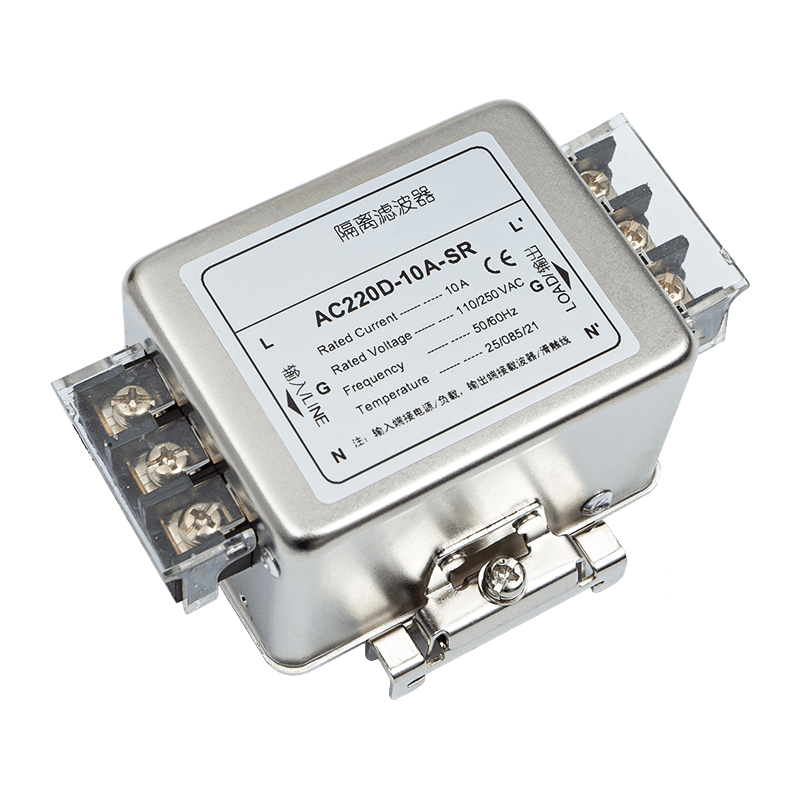
Three countermeasures earn their cost: a proper coupling network, common-mode chokes on the feed, and an isolation filter at the boundary of the installation. The filter keeps your PLC signal inside the plant and keeps outside signalling and noise off your cable.
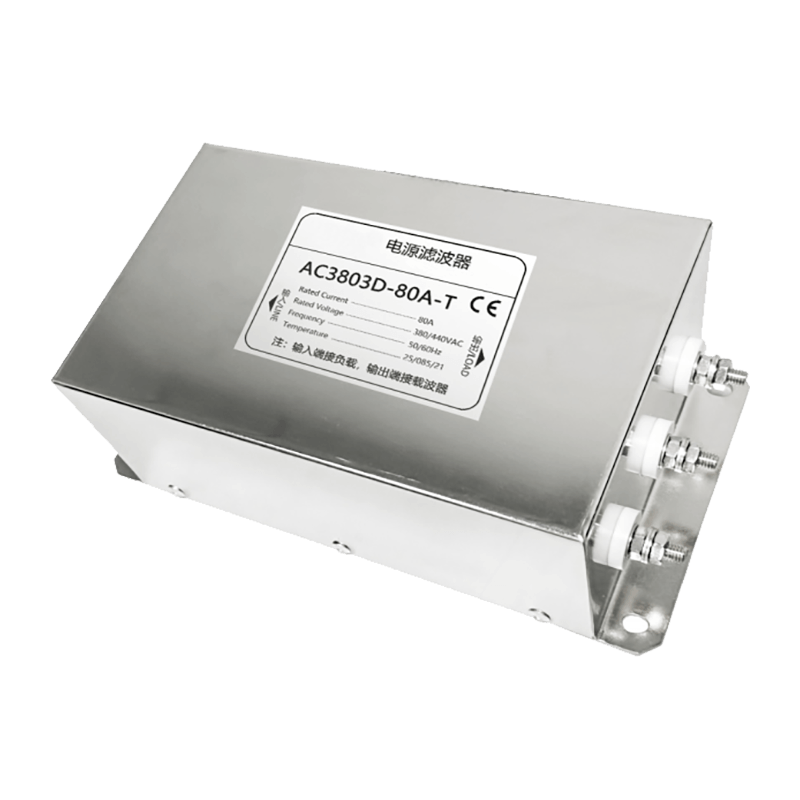 AC3803D Three-Phase Three-Wire Two-Stage PLC Isolation FilterIndustrial isolation filter for HD-PLC power lines, providing secondary filtering for three-phase three-wire systems in noisy motor-drive and servo environments.View Product →
Coexistence is usually band planning rather than a hardware conflict: narrowband and broadband links can share one cable as long as their spectra do not overlap and each end is filtered.
When Narrowband PLC Is Still the Right Answer
Narrowband is not a legacy choice. In industry it is often the correct one.
- Interval metering and sub-metering. A 15-minute energy counter is a few dozen bytes, so hundreds of meters behind one concentrator fit inside a few hundred kbit/s.
- Long or branchy feeders. Beyond roughly 300 m with several branch points, narrowband holds where broadband needs repeaters.
- Slow telemetry and status. Tank levels, pump run hours, gate position and alarm bits do not need bandwidth.
- Voice over the power line. PLC digital telephones are a narrowband-class service, available in 24 V and 220 V versions for maintenance and dispatch points.
- Cost and power. Narrowband front ends are simpler, so the bill of materials and the consumption per node are lower.
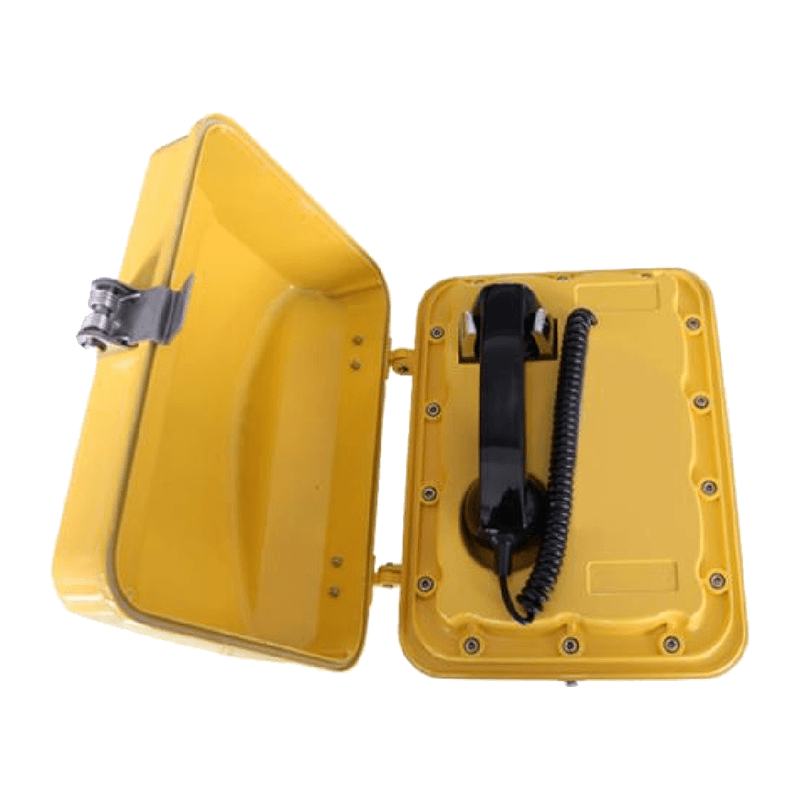 CS618L-FB220 AC Explosion-Proof Industrial Digital TelephoneExplosion-proof IP68 telephone for hazardous industrial AC power-line signaling, using wideband carrier networking and requiring independent DC 24V power.View Product →
When Broadband PLC Pays Off
- Streaming condition data. Vibration or power-quality capture at high sample rates does not survive a narrow channel.
- Retrofit where conduit is full. A high-speed link over existing power cable can replace an Ethernet run at a fraction of the civil work.
- Low-latency control and video. Gate cameras, access control and interlock signals need tens of milliseconds, not seconds.
Hardware for this side of the decision is a high-speed module plus a matched coupler.
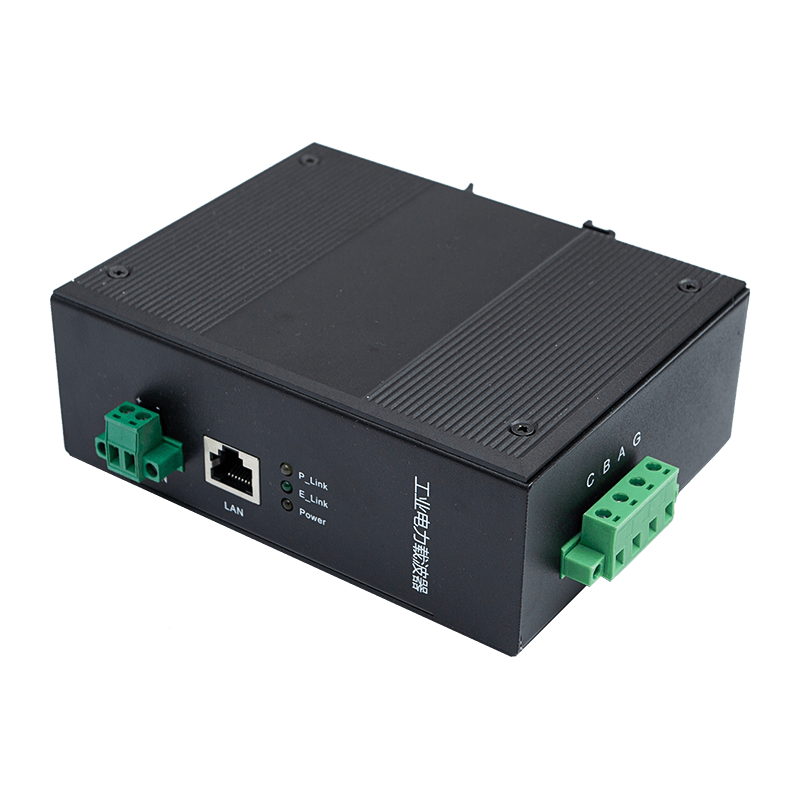 KS1000M Three-Phase Gigabit Broadband Power Line Communication DeviceIndustrial HD-PLC device delivering gigabit bidirectional data over power lines for harsh automation, mining, rail, and logistics networks where cabling is difficult.View Product →
If the cable itself is the problem, with long stubs or phases that cannot be bridged, a radio link may beat both. It is worth reading a comparison of HD-PLC and narrowband wireless links before you commit to copper.
A Checklist Before You Order Hardware
- Distance and topology. Measure the electrical path, not the cable route, and count branch points and stubs.
- Payload and interval. Bytes per message times nodes per second, then multiply by three to five for overhead and retries.
- Latency target. Under 50 ms means broadband. One second or more leaves narrowband open.
- Noise survey. Log the noise floor with drives running and compare it with the band you plan to use.
- Band planning and compliance. Check which bands are free, whether utility PLC is present, and which EMC rules apply at the boundary.
If the answers point to a few hundred kbit/s at most over a long feeder, stop there. If they point to sustained megabits, treat coupling, filtering and repeater budget as project scope rather than commissioning troubleshooting.
FAQ
Yes, provided their spectra do not overlap and each installation is filtered at its boundary. Filters prevent the two systems from loading each other and block utility signalling from entering your network.
Q2: How much data rate do I actually need?
Multiply payload size by node count and divide by the update interval, then add a factor of three to five for protocol overhead and retries. Most metering and status projects land under 100 kbit/s and never need broadband.
Q3: Is narrowband PLC reliable enough for production data?
For counters, interlock status and slow telemetry, yes. It is less suitable when you need waveform capture or sub-100 ms response, because polling cycles and retries add up on a narrow channel.
Q4: How do I keep PLC signals out of the utility network?
Install an isolation filter at the service entrance or at the boundary of the monitored area, confirm the coupling network is matched, and verify the chosen band against local EMC requirements before commissioning.
Send us four numbers: feeder length, node count, payload size and update interval. With those, we can tell you whether a narrowband link will hold, whether a high-speed module and isolation filter are worth the extra cost, and which hardware fits the run.
Talk to ASY Electronics about your feeder, and we will map the bands, the coupling points and the filter placement before you buy a single node.