

Industrial environments demands robust, cost-effective infrastructure capable of sustaining seamless data flow across extensive networks. The integration of the Industrial Internet of Things (IIoT) requires thousands of sensors, actuators, and controllers to be interconnected. Traditional wireless technologies often encounter physical barriers, electromagnetic interference, and severe signal attenuation in industrial plants. Excavating walls and channels to deploy dedicated Ethernet or fiber-optic cables incurs high installation expenses and operational downtime.
This challenge highlights the relevance of utilizing existing power cable networks for data transmission. This technology uses current power distribution networks to transmit high-frequency data signals alongside standard electrical power. By utilizing installed wiring infrastructure, industrial operations can establish resilient communication channels without the material costs and labor associated with dedicated data cabling. This approach bridges the gap between power distribution and intelligent automation networking.
The Architecture of Power Line Communication
The operational framework of powerline communication depends on modulating digital data into high-frequency carrier signals, which are superimposed onto standard 50 Hz or 60 Hz alternating current (AC) or direct current (DC) power lines. Because data signals occupy a significantly higher frequency band than electrical power, both can coexist on the same physical conductor without mutual disruption.
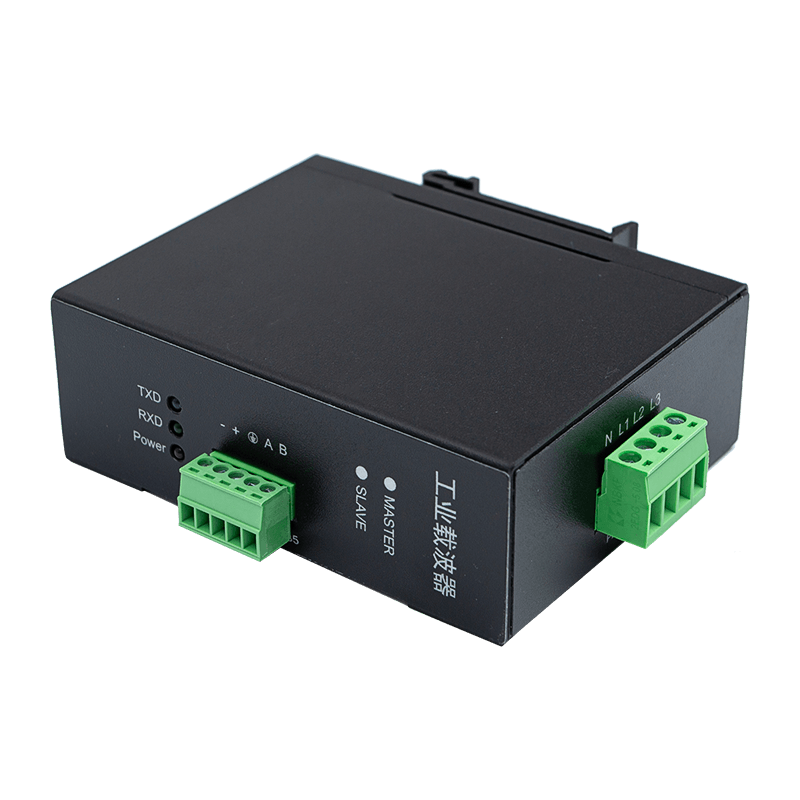
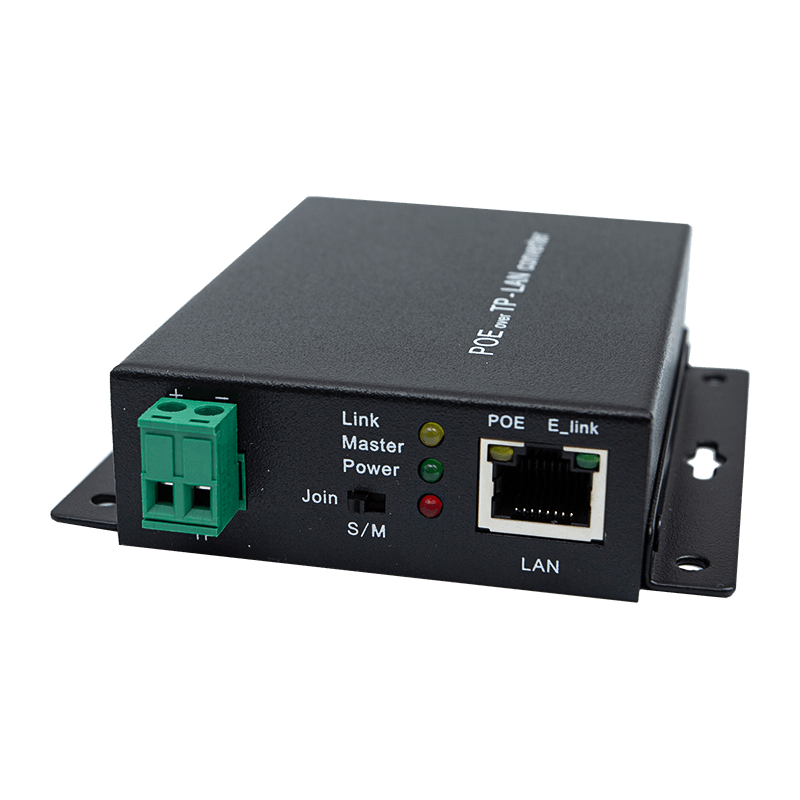
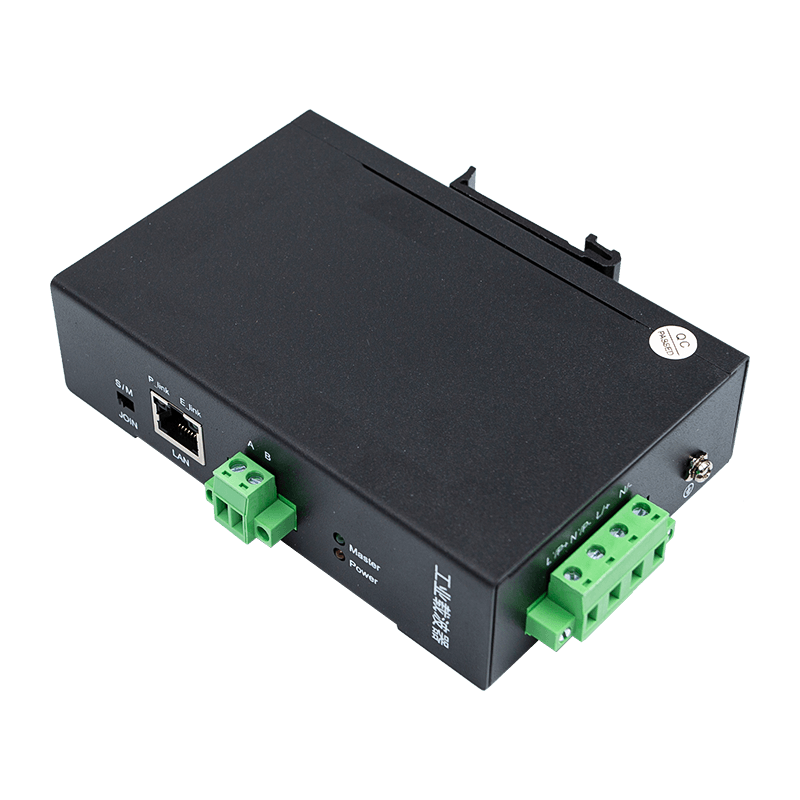
At the transmitting node, an electronic coupling circuit receives digital data from an industrial controller or sensor. A built-in modem modulates this data using advanced digital modulation schemes. The coupled signal passes through a high-pass filter that blocks the low-frequency electrical power while injecting the low-voltage, high-frequency data signal into the power network. At the receiving terminal, a corresponding coupling device separates the high-frequency signal from the power wave, allowing the receiving modem to demodulate the signal back into standard digital formats for programmable logic controllers (PLCs) or edge computing nodes.
To preserve data integrity against physical impairments such as line attenuation, impedance fluctuations, and transient impulse noise from heavy industrial machinery, modern plc power line communication frameworks deploy robust modulation protocols. Technologies such as Orthogonal Frequency Division Multiplexing divide the available transmission band into numerous orthogonal sub-carriers. Each sub-carrier is modulated at a low symbol rate, making the system highly resilient against narrow-band interference and frequency-selective fading.
Narrowband PLC vs Broadband PLC in IIoT
Industrial applications present a broad spectrum of data transmission demands. Certain architectures, such as remote micro-grids and localized sensor arrays, require low-throughput, extended-range telemetry. In contrast, automated manufacturing lines or real-time machine vision tracking necessitate substantial data throughput. Consequently, power line communication plc implementations are divided into two main categories: Narrowband and Broadband solutions.
Understanding the operational distinctions between these categories is essential for selecting appropriate hardware architectures. The table below outlines the core functional parameters distinguishing narrowband PLC vs broadband PLC solutions within powerline networking for IIoT.
| Operational Parameter | Narrowband PLC | Broadband PLC |
|---|---|---|
| Frequency Spectrum | 3 kHz to 500 kHz | 1.8 MHz to 250 MHz |
| Data Throughput Rates | Up to several hundred kbps | From several Mbps up to several hundred Mbps |
| Maximum Transmission Range | Up to several kilometers (extended reach) | Typically limited to 100 - 300 meters without repeaters |
| Immunity to Electrical Noise | High resistance to line attenuation and distortion | Susceptible to localized high-frequency industrial noise |
| Primary IIoT Applications | Smart metering, grid monitoring, sensor fields | HD video surveillance, backhaul networks, complex automation |
Selecting the optimal standard requires balancing transmission distance against required bandwidth. Narrowband variants excel in wide-area utility infrastructures where data packet sizes are small but distances stretch over kilometers. Conversely, broadband variants function as high-speed data trunks inside manufacturing plants, routing high-density industrial PLC data transmission channels through short-range internal factory cabling grids.
Industrial PLC Data Transmission Advantages
Integrating advanced Power Line Carrier(PLC) Solutions into an existing industrial topology offers several strategic operational benefits over conventional wireless and hardwired network topologies. These advantages include financial savings, structural flexibility, and high reliability under difficult environmental conditions.
Industrial facilities feature dense metallic infrastructure, thick reinforced concrete structures, and high-voltage machinery. These elements block radio frequency signals, making wireless solutions prone to intermittent signal drops and complete blind spots.
By routing signals directly through shielded power conductors, powerline networking for IIoT establishes dedicated, physical communication channels that remain uninhibited by the plant's structural barriers. Key PLC communication advantages include:
- Reduced Total Cost of Ownership: Minimizes the capital expenditures needed for new conduit installation, fiber optic connectors, and specialized network technicians.
- Simplified Field Scalability: Simplifies network expansion by allowing any power tap or motor control center connection to instantly serve as an active network node.
- Deterministic Data Flow: Utilizes structured physical media to deliver consistent, predictable latency characteristics necessary for time-critical industrial processes.
- Physical Network Isolation: Confines communication signals within the internal electrical boundaries of the facility, lowering the exposure to external over-the-air cyber threats.
Mitigating Channel Noise and Signal Degradation
While the advantages of leveraging existing electrical infrastructure are substantial, the power grid was not originally designed to support high-frequency digital communication. Industrial power networks present harsh signal conditions characterized by unpredictable impedance shifts, high signal attenuation, and multiple forms of electrical interference.
To maintain stable data rates across these channels, modern communication hardware utilizes specialized signal conditioning components and error correction algorithms:
- Adaptive Bit Loading: Dynamically scans the signal-to-noise ratio of individual OFDM sub-carriers, shifting data traffic away from degraded frequencies to clean channels in real time.
- Passive Line Conditioning: Employs inline high-current blocking chokes and low-pass filtering modules to isolate severe noise sources, such as variable frequency drives or heavy switching power supplies.
- Forward Error Correction: Embeds redundancy algorithms within transmitted data packets, enabling the receiving node to detect and correct single-bit and burst transmission errors caused by sudden voltage spikes.
Implementing these advanced mitigation strategies ensures that industrial data systems achieve the reliable uptime levels required for continuous operations, preventing data loss even during heavy machine startup cycles.
Frequently Asked Questions
Q1: Can data transmission occur safely across high-voltage lines?
Yes. Specialized high-voltage coupling capacitors and transformer circuits isolate the sensitive low-voltage digital modems from the high-voltage power distribution network. This allows data to travel safely across medium- and high-voltage lines without risking damage to the automation hardware.
Q2: How do variable frequency drives (VFDs) affect data reliability?
Variable frequency drives generate high-frequency harmonic distortion and transient noise that can interfere with the data bands used by powerline networks. To mitigate this, engineers install heavy-duty low-pass line filters directly on the output lines of the VFDs to suppress harmonic emissions and protect the data signal's integrity.
Q3: Is data transmission interrupted when power to a machine is cut off?
Data transmission depends on the physical continuity of the copper cables rather than the presence of live electrical current. If a machine is powered down but remains physically connected to the electrical grid, the high-frequency data signals can still pass through the unpowered lines, provided that any isolating circuit breakers or switches remain closed.
Q4: Can these systems communicate through step-down transformers?
Standard power transformers act as low-pass filters that significantly attenuate high-frequency data signals. To enable communication across different voltage levels, external bypass bridges or active signal repeaters are installed around the transformer to route data signals into the adjacent voltage grid.