

A maintenance engineer walks onto the floor of a 15,000 m² factory. The new project calls for 60 temperature monitoring points across the press line and the high-bay warehouse. The production manager wants wireless, because nobody wants to cut trenches through concrete. The electrician points out that every machine is already connected to the 380 V grid, and that a broadband PLC backbone can ride on it with a coupler and a filter. That is when the real question surfaces: broadband PLC or wireless communication?
After two decades of building industrial data links, our short answer is this: broadband PLC wins wherever fixed assets are dense, walls are thick, and latency must stay stable; wireless wins wherever nodes move, battery power is required, or the site contains open outdoor spans. Neither technology is universally better. The strongest plant networks are designed per segment, using each transport where it earns its keep.
Broadband PLC and Wireless: Two Routes to the Same Destination
Broadband power line communication (BPLC) superimposes high-frequency carriers, typically from 1.8 MHz up to more than 100 MHz, onto low-voltage power conductors. With OFDM modulation, the same cables that carry AC power become a data backbone. For the full mechanism behind the technology, see our explanation of what power line communication is in industrial IoT.
Wireless communication sends radio-frequency signals through the air. In industrial practice this means Wi-Fi in the 2.4/5 GHz bands, sub-GHz protocols, and cellular links. Every wireless variant has a different range and throughput ceiling, but all of them share one constraint: the signal must fight through obstacles, reflections, and spectrum competition.
| Dimension | Broadband PLC | Wireless (Wi-Fi / sub-GHz) |
|---|---|---|
| Physical medium | Existing power conductors | Open air / RF spectrum |
| Typical throughput | 100 to 500+ Mbps on a clean line | 10 to 900+ Mbps depending on standard, range, and channel |
| Obstacle behavior | Follows the cable through concrete walls and metal structures | Strong attenuation through concrete, steel racks, and moving equipment |
| Installation effort | Coupler and filter per node; no data cable pulling | Access point placement, backhaul cabling, channel planning |
| Endpoint power | Mains power available at every node | Battery or Power over Ethernet required |
| Latency stability | Low jitter, bounded delivery time | Variable jitter from contention and retries |
Both technologies are legitimate answers. The decision becomes clear only when you put them against a specific floor plan and a specific traffic profile.
Reliability in a Real Factory: Each Medium Fails Differently
On a power line, noise comes from the same copper that feeds the machines. Variable-frequency drives, welding circuits, switch-mode power supplies, and motor starters inject impulsive and harmonic noise directly into the data path. This is the classic reason early BPLC deployments struggled. Modern BPLC equipment copes with adaptive tone mapping, forward error correction, and correct earthing, but the noise still has to be stopped at the entrance of every modem.
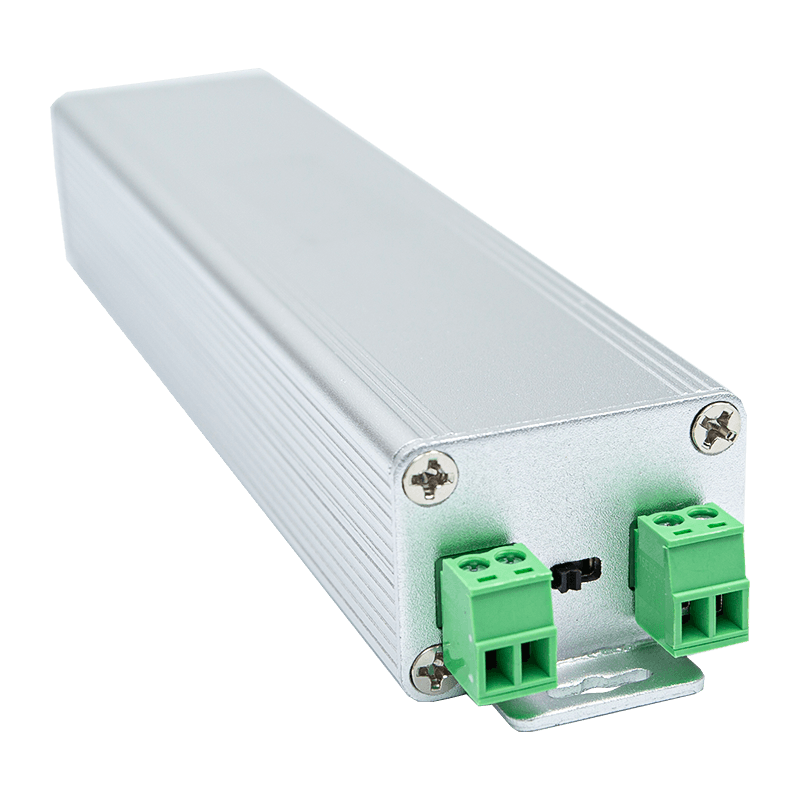
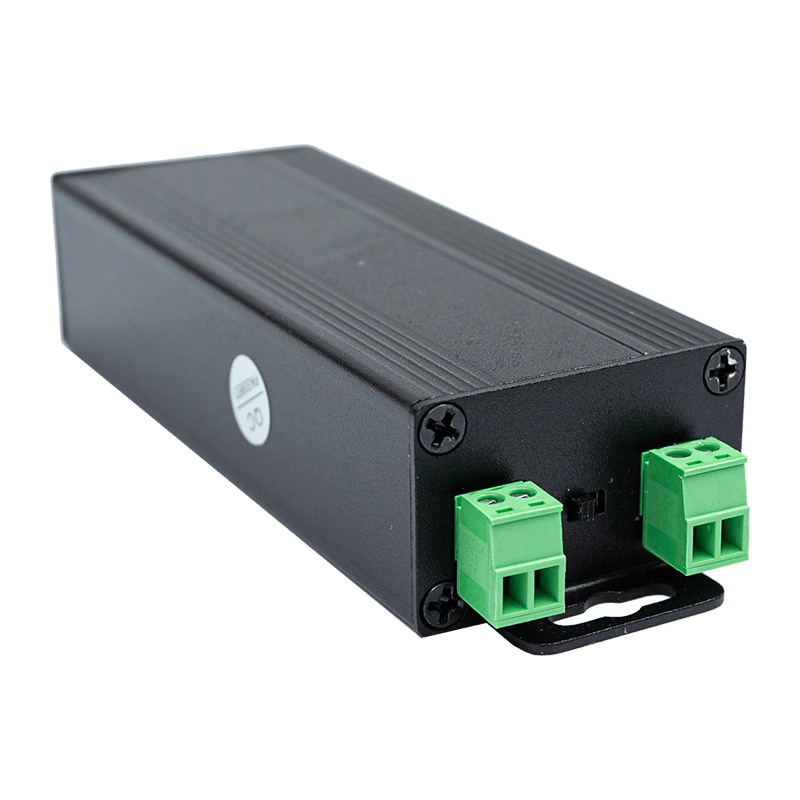
That is why production-grade installations put an isolation filter between the socket and the modem. ASI's AC220D isolation filter is built for exactly this point: it rejects common-mode noise while leaving the mains power unaffected. Facilities that add filters at each node consistently report lower packet loss and fewer dropped sessions than sites that plug modems straight into the wall. We explain the practical engineering steps in our guide to reducing noise in broadband power line communication.
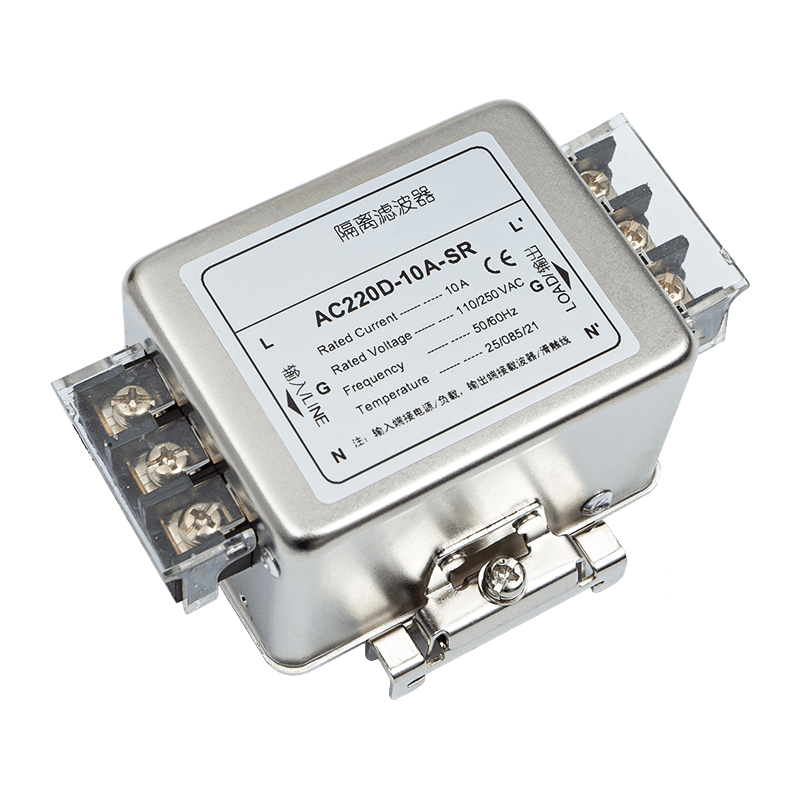 ASI AC220D Single-Phase Isolation Filter for PLC Noise RejectionThis isolation filter is designed for single-phase power lines, blocking common-mode noise while preserving carrier signals. It helps prevent packet loss and dropped sessions in broadband power line communication installations, making it a practical addition to modem connections.View Product →
Wireless suffers from a different failure mode. The 2.4 GHz band is shared by thousands of radios, concrete attenuates the signal, and metal racks or forklifts create multipath reflections. A link that works during a quiet Saturday will drop packets the moment a container moves between the transmitter and the receiver. The troubleshooting difference is striking: PLC noise problems are solved with filters, grounding, and wiring discipline; wireless problems are usually solved by moving antennas or adding access points.
Rule of thumb: guided media needs input filtering; unguided media needs a clear path. Both need engineering, but the kind of engineering is completely different.
Data Rate and Latency: Beyond the Specification Sheet
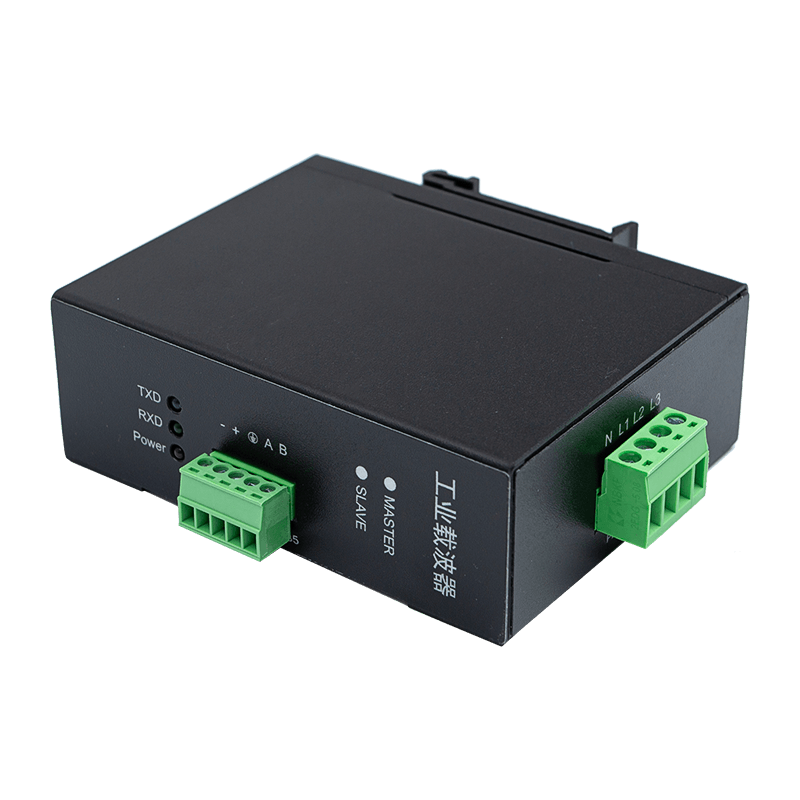
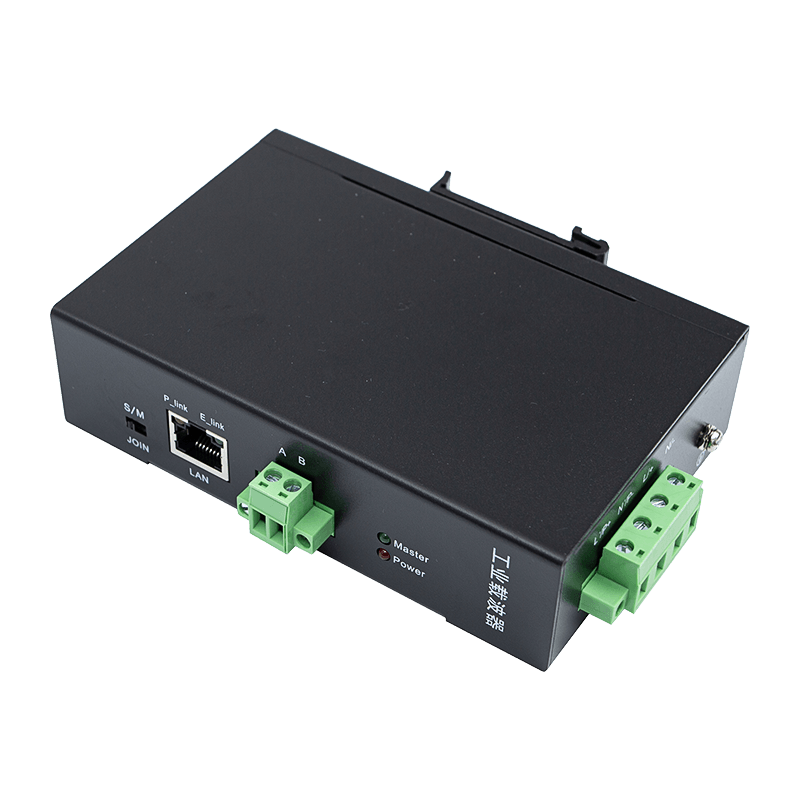
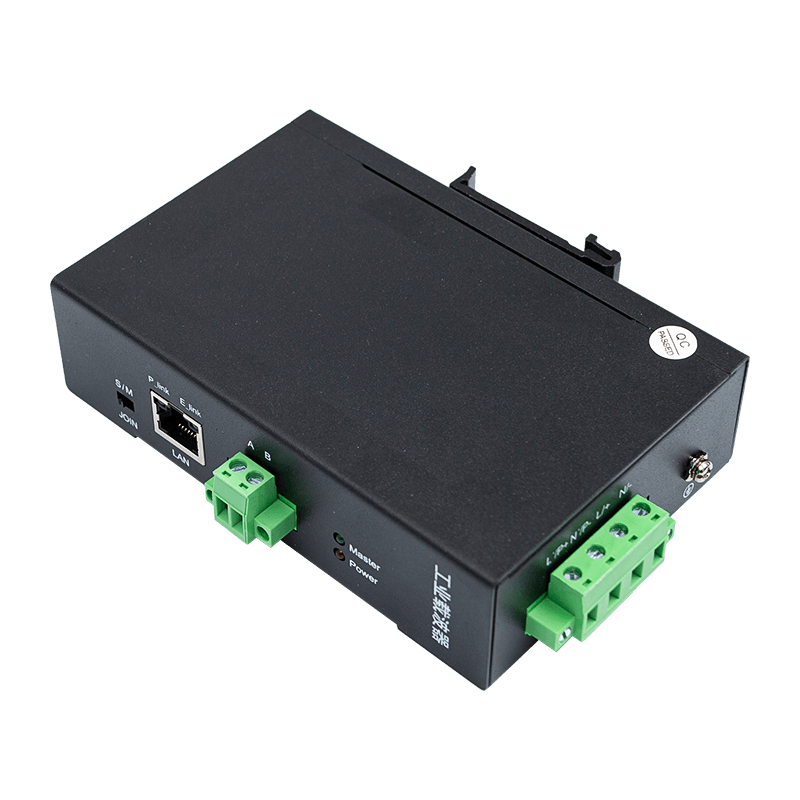
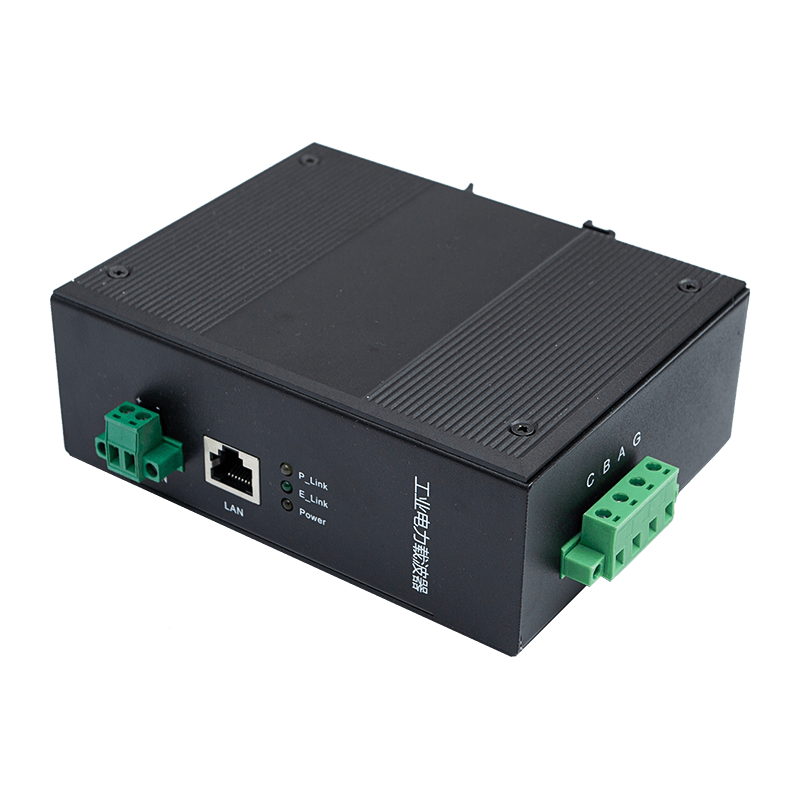
BPLC is called broadband for a reason. On a well-conditioned low-voltage line, modern H-PLC modules sustain real-world throughput in the hundreds of megabits per second, which is enough for camera feeds, SCADA trending, and controller program transfers. ASI's KS1000M H-PLC module belongs to this class: it connects control cabinets, monitoring gateways, and networked machinery over the existing distribution grid, without new Ethernet drops.
 ASI KS1000M Gigabit Industrial Power Line Communication ModuleAn industrial-grade gigabit PLC module based on IEEE P1901 and HomePlug AV/AV2, supporting OFDM modulation and AES-128 encryption. It enables high-throughput communication over existing power lines in harsh environments such as mines, warehouses, and automated facilities, with flexible networking and dual power supply options.View Product →
Wireless can match those headline numbers, but only in ideal conditions. Wi-Fi 6 advertises multi-gigabit figures measured close to the access point on a clean channel. Inside a running plant, the effective throughput is far lower, and it drops further with every wall and every shelf loaded with parts.
Latency is the more decisive difference. BPLC delivers a few milliseconds with predictable jitter; wireless adds carrier-sensing, retransmissions, and gateway hops. For closed-loop control or synchronized motion, that statistical risk is often disqualifying.
Coverage and Installation Cost: The Existing Grid Is Hard to Beat
The cost argument for broadband PLC starts from a fact: the infrastructure is already in place. Every machine, every lighting circuit, and every control cabinet connects to the AC grid, and the grid does not care whether it carries power alone or power plus data. Adding a node takes a coupler, a filter, and a modem inside the cabinet. No cable trays, no drilling, no production shutdown for trenching.
Wireless must build its own infrastructure. In a metal-heavy industrial space, an access point typically covers only a few hundred square meters, so the plant needs multiple APs, each with Power over Ethernet, a switch port, and a mounting position with a clear sight line. Battery-powered nodes add a maintenance burden that grows with the node count.
| Factor | Broadband PLC | Wireless |
|---|---|---|
| Indoor coverage per node / AP | Follows the electrical bus for tens to hundreds of meters | 15 to 30 m in dense industrial environments |
| Data cable required | None | Backhaul for every access point |
| Transformer boundaries | Blocked without a bypass coupler | Transparent |
| Outdoor and inter-building links | Not practical | Practical with directional antennas |
| Marginal cost per added node | Low (coupler, filter, modem) | Low per endpoint, but AP density dominates cost |
The unavoidable caveat is the transformer. Distribution transformers block high frequencies, so a BPLC network does not cross from one transformer zone to the next unless each zone has its own head-end modem or a bypass coupler is installed. Wireless crosses those boundaries, and open yards, at no extra cost. In practice, a multi-building plant often ends up with a BPLC backbone inside each hall and a wireless bridge between halls.
Security and Determinism: Why Guided Media Still Wins
A signal on a copper conductor stays on the conductor unless someone physically couples onto it. Tapping a BPLC link requires access to the cable or the distribution cabinet, which is hard to do unnoticed inside a guarded plant. Wireless signals leave the building envelope in every direction; anyone with a receiver in the parking lot can observe them. Strong encryption, WPA2/WPA3 or IPsec, is mandatory in both worlds, but the threat model is not the same.
Determinism reinforces the same choice. BPLC networks using scheduled access provide bounded latency. Wireless protocols use listen-before-talk, exponential backoff, and retries, and the worst-case delivery time therefore grows as load rises. For safety interlocks and synchronized axes, a statistical delivery guarantee is not good enough. For temperature trends, energy totals, and vibration signatures, wireless is entirely sufficient and often cheaper to deploy.
How to Choose: A Decision Framework for Factory Networks
The fastest way to turn the broadband-PLC-versus-wireless debate into an engineering decision is to work through four conditions in order.
- Does the node move? If the endpoint is a handheld controller, an AGV, or a rotating assembly, wireless is the only practical transport.
- Can the node connect permanently to the AC grid? If yes, BPLC is viable and usually cheaper per point than installing and feeding an access point.
- Is the required latency below roughly 10 ms with low jitter? If yes, guided transmission is the safer engineering bet.
- Do transformer zones or open-air gaps separate buildings? If yes, plan wireless links for those gaps and BPLC within each zone.
The pattern that emerges on real projects looks like this.
Production line inside one hall
BPLC backbone Metal racks, dense spectrum, and thick walls make RF unreliable. A BPLC backbone connects every cabinet, and each cabinet terminates the local fieldbus segments of the machines it serves.
Outdoor tank farm or solar field
Wireless Power line access is not guaranteed at every measurement point, distances are long, and battery-powered sensors are acceptable. Sub-GHz wireless covers hundreds of meters at modest data rates.
Mixed fixed and rotating assets
Both Fixed compressors, pumps, and switchgear connect through BPLC; rotating shafts and moving carriages use short-range wireless modules. A gateway joins both segments into a single SCADA view.
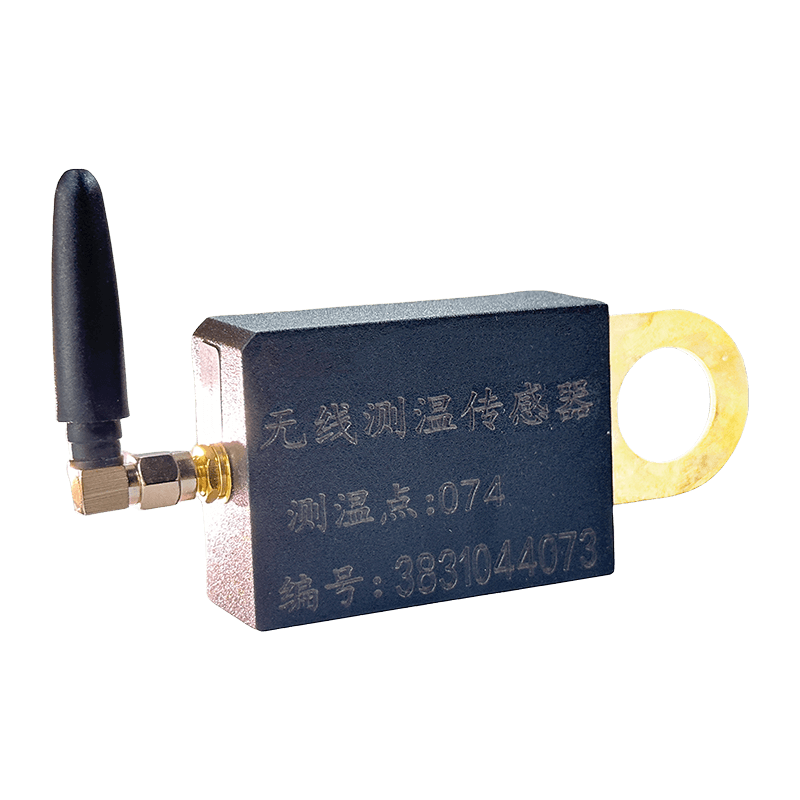
ASI Electronics manufactures both sides of this comparison, and that is why we keep recommending a mixed design. On the wireless side, the endpoint sensor matters as much as the backbone. The KLDS30WS3A wireless temperature sensor, for instance, monitors industrial equipment continuously and reports through a local gateway into the same platform as the BPLC links.
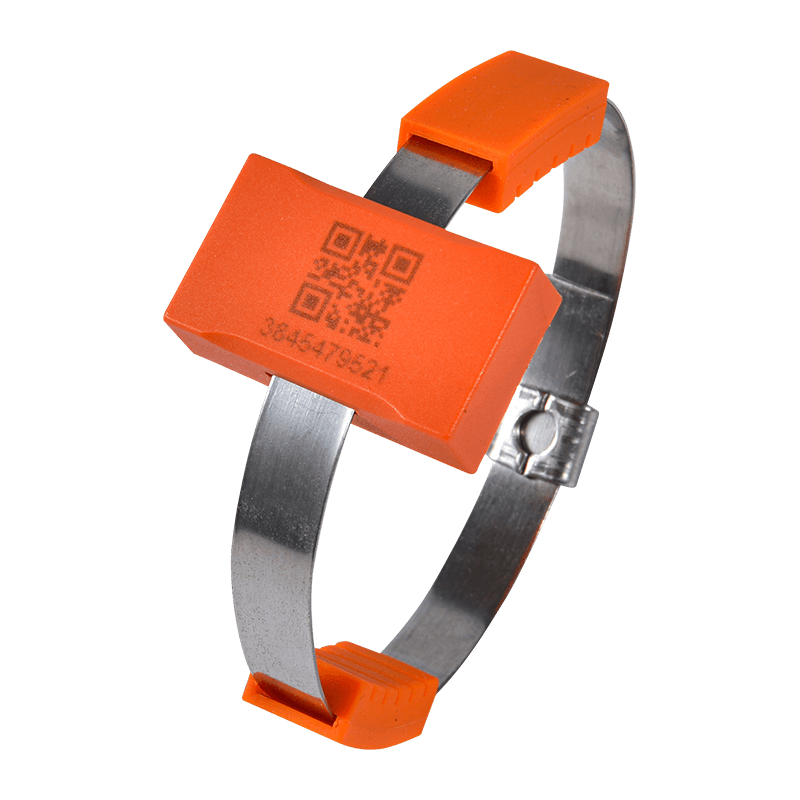 ASI KLDS30WS3A Passive Wireless Temperature Sensor for Equipment MonitoringThis passive wireless temperature sensor uses CT induction power extraction, so it needs no batteries or external power. It offers single-channel, high-precision monitoring with strap-on mounting, suitable for low-voltage switchgear and continuous industrial equipment temperature tracking in mixed BPLC and wireless networks.View Product →
Frequently Asked Questions
Q1: Is broadband PLC faster than Wi-Fi in a factory?
On a clean, filtered line, BPLC sustains throughput in the hundreds of Mbps. Wi-Fi can reach similar numbers only close to the access point with a clean radio channel. The real difference is consistency: BPLC stays stable, while Wi-Fi changes with distance, obstacles, and neighboring radios.
Q2: Can broadband PLC and wireless be used in the same installation?
Yes, and this is the most common architecture in practice. A BPLC backbone carries fixed equipment traffic, and a wireless segment covers mobile or battery-powered sensors. A gateway or monitoring host joins both transports so the application layer sees one network.
Q3: Do broadband PLC signals cross distribution transformers?
No. Transformers block high-frequency signals. Each transformer zone needs its own head-end modem, or a bypass coupler must be installed across the transformer. It is a planning point, not a technical dead end.
Q4: Which technology is more secure for industrial data?
PLC has a physical layer advantage because tapping a conductor requires physical access. Wireless signals radiate outside the building and therefore demand mandatory encryption and periodic audits. Both can be secured; the operational effort is different.