

Introduction: The Growing Importance of Gas Flow Measurement
In modern industrial systems, precise gas flow measurement has become a critical factor for ensuring process stability, energy efficiency, and operational safety. Industries such as chemical processing, HVAC, semiconductor manufacturing, and energy management all rely heavily on accurate monitoring of gas consumption and distribution.
Among various flow measurement technologies, the thermal mass flow meter has emerged as one of the most reliable solutions for direct mass flow measurement of gases. Unlike traditional volumetric flow devices, a thermal gas mass flow meter does not require pressure or temperature compensation, making it highly efficient for complex industrial environments where conditions constantly change.
As industrial systems become more automated and data-driven, demand for inline gas flow meter solutions continues to increase, especially in applications requiring real-time monitoring and high precision at low flow ranges.
What Is a Thermal Mass Flow Meter?
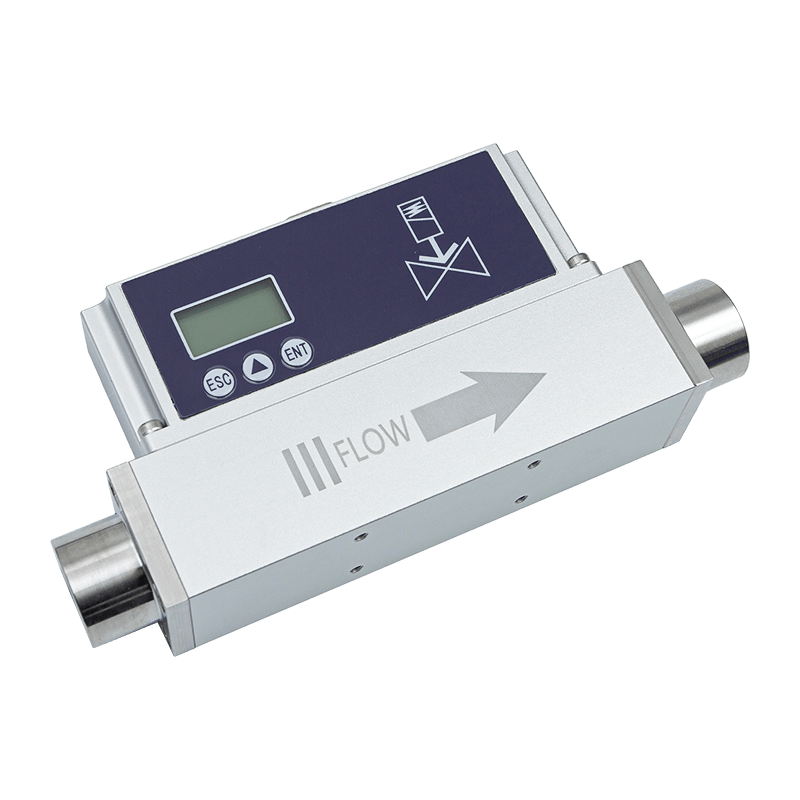
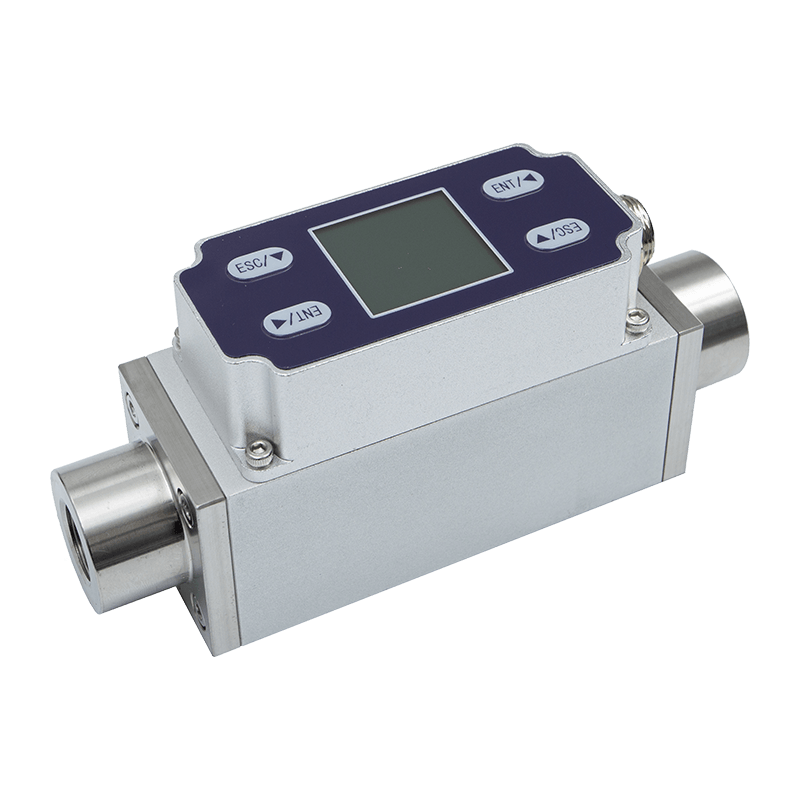
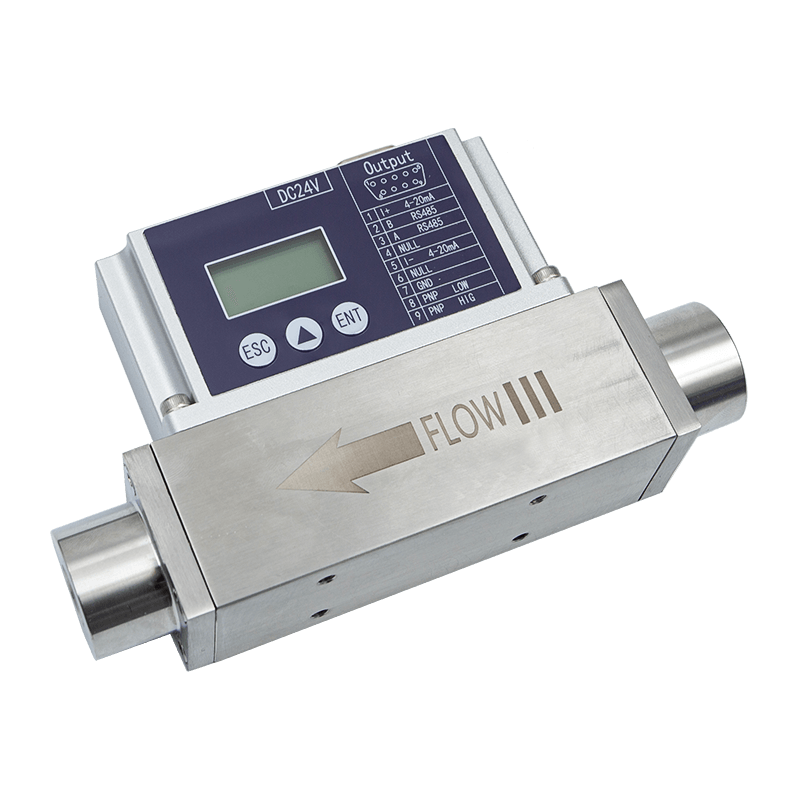
A thermal mass flow meter is an instrument designed to measure the mass flow rate of gases based on thermal dispersion principles. It directly measures how much heat is carried away by the flowing gas, which correlates with the mass flow rate.
Unlike volumetric flow meters, which measure gas volume under varying conditions, a thermal gas mass flow meter provides direct mass flow output, eliminating the need for complex conversions.
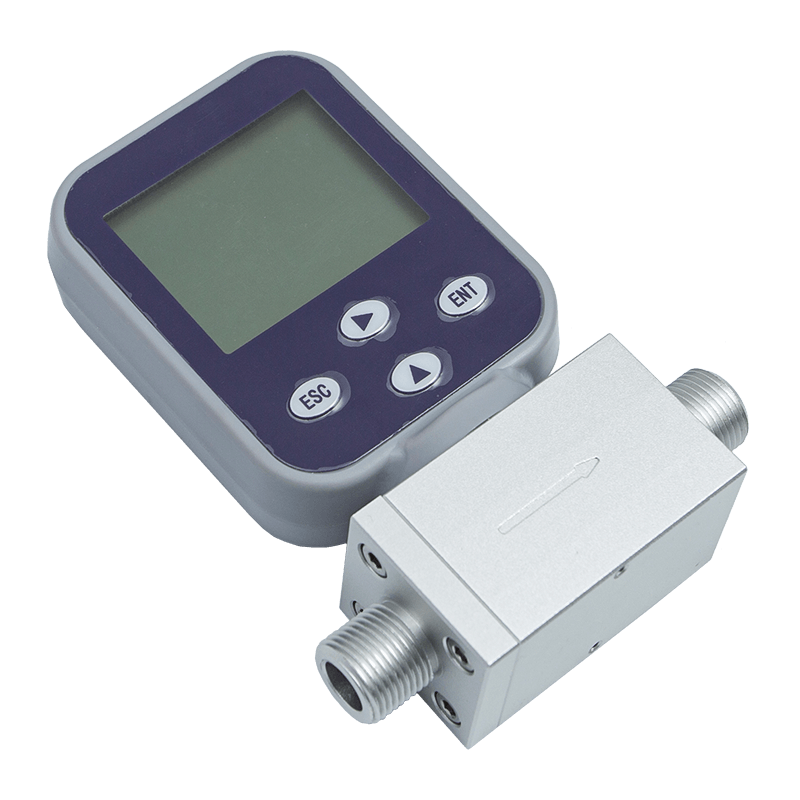
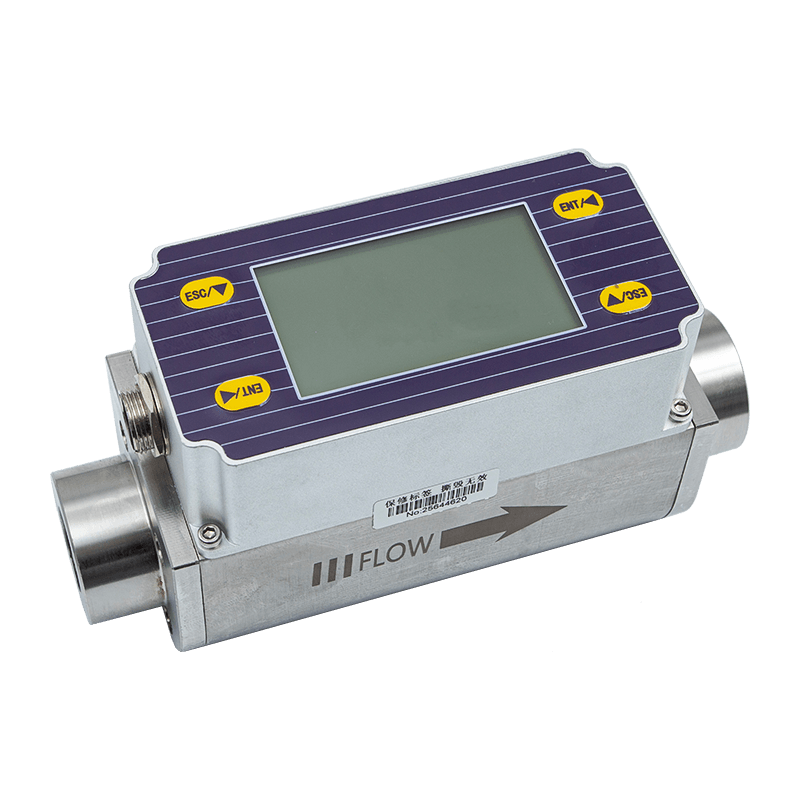
This makes it particularly suitable for applications where gas density varies or where environmental conditions are unstable. In many industrial systems, the inline gas flow meter configuration is preferred due to its ease of installation and integration into existing pipelines.
Working Principle of Thermal Mass Flow Meter
The operating principle of a thermal mass flow meter is based on heat transfer. The device typically includes two temperature sensors and a heating element placed in the gas stream.
One sensor measures the baseline gas temperature, while the heating element raises the temperature of the second sensor. As gas flows through the sensor, it carries heat away from the heated element. The amount of energy required to maintain a constant temperature difference is directly proportional to the mass flow rate.
This principle allows the thermal gas mass flow meter to provide highly sensitive and accurate measurements, especially in low-flow gas applications where other technologies may struggle.
The simplicity of this mechanism also contributes to the reliability of inline gas flow meter designs, reducing mechanical wear and maintenance requirements.
Key Components and System Structure
A typical thermal mass flow meter consists of several integrated components that work together to ensure measurement accuracy and signal stability.
Main components include:
- Heated sensing element
- Reference temperature sensor
- Signal processing unit
- Transmitter module
- Digital communication interface
These components are engineered to ensure stable operation even in harsh industrial environments.
Key Components of a Thermal Mass Flow Meter
| Component | Function | Role in Measurement |
|---|---|---|
| Heating sensor | Generates controlled heat | Creates measurable thermal gradient |
| Temperature sensor | Detects gas temperature changes | Ensures accuracy of heat transfer calculation |
| Signal processor | Converts raw signals into flow data | Enables digital output |
| Transmitter module | Sends standardized output signals | Integration with control systems |
Advantages of Thermal Mass Flow Meter in Industrial Applications
The growing popularity of the thermal mass flow meter is driven by its unique advantages compared to traditional flow measurement technologies.
One of the most significant benefits is its ability to measure gas flow directly without requiring pressure or temperature compensation. This reduces system complexity and improves long-term reliability.
In addition, thermal mass flow meters are highly effective in low-flow and low-pressure environments, where many other technologies fail to provide stable readings. This makes them ideal for applications involving compressed air, nitrogen, oxygen, and other industrial gases.
Another key advantage is the low maintenance requirement. With no moving parts, the inline gas flow meter design minimizes mechanical wear and extends operational lifespan.
Thermal Mass Flow Meter for Low Pressure Gas Applications
Low-pressure gas systems are widely used across industrial environments, particularly in energy-efficient production processes. In such conditions, measurement accuracy becomes more difficult due to fluctuating density and flow instability.
A thermal gas mass flow meter performs exceptionally well in these environments because it directly measures mass flow rather than relying on pressure-based calculations.
This makes it suitable for compressed air systems, inert gas distribution, and controlled atmosphere processes where precision is essential.
Industrial Applications of Thermal Mass Flow Meter
The versatility of the thermal mass flow meter allows it to be used across a wide range of industries. Its ability to deliver real-time and accurate gas flow data makes it an essential component in modern industrial automation systems.
Industrial Applications Overview
| Industry | Gas Type | Application Purpose |
|---|---|---|
| HVAC systems | Air | Energy efficiency monitoring |
| Chemical processing | Process gases | Reaction control and safety |
| Manufacturing | Compressed air | Consumption optimization |
| Semiconductor | Ultra-pure gases | Precision process control |
| Energy systems | Fuel gases | Combustion optimization |
In all these applications, inline gas flow meter configurations are widely adopted due to their ease of integration and stable performance.
Thermal Mass Flow Meter vs Differential Pressure Flow Meter
Understanding the difference between measurement technologies is essential when selecting the right instrument for industrial use.
A thermal mass flow meter measures mass flow directly using heat transfer principles, while a differential pressure flow meter calculates flow based on pressure drop across a restriction.
This fundamental difference leads to significant variations in performance, especially in low-flow conditions.
Technology Comparison
| Feature | Thermal Mass Flow Meter | Differential Pressure Flow Meter |
|---|---|---|
| Measurement principle | Thermal dispersion | Pressure differential |
| Output type | Mass flow | Volumetric flow |
| Accuracy at low flow | High | Limited |
| Maintenance requirement | Low | Medium to high |
| Installation complexity | Simple inline design | Requires pressure setup |
The thermal gas mass flow meter offers superior performance in applications requiring stable and accurate low-flow measurement.
Accuracy and Performance Factors
Several factors influence the accuracy of a thermal mass flow meter in industrial environments.
Gas composition plays a significant role, as different gases have varying thermal conductivity properties. Calibration is often required to ensure accuracy across different gas types.
Temperature stability is another critical factor. Since the measurement is based on heat transfer, extreme environmental changes can impact performance if not properly compensated.
Additionally, installation conditions such as pipe length, turbulence, and flow direction can affect the performance of an inline gas flow meter.
Selection Criteria for Thermal Mass Flow Meter
Choosing the right thermal mass flow meter requires careful consideration of several technical parameters.
Key selection factors include:
- Gas type compatibility
- Flow range requirements
- Pipe diameter
- Output signal type
- Environmental conditions
- Installation configuration
A properly selected thermal gas mass flow meter ensures long-term accuracy and system stability, reducing operational risks and maintenance costs.
Installation and Maintenance Considerations
Correct installation is essential for ensuring optimal performance of a thermal mass flow meter. The sensor should be placed in a straight section of the pipeline to avoid turbulence and flow distortion.
Inline gas flow meter systems are typically easier to install compared to mechanical flow meters, as they do not require extensive piping modifications.
Maintenance requirements are minimal due to the absence of moving parts. However, periodic calibration and sensor inspection are recommended to maintain long-term accuracy.
Why Choose ASY Electronics?
Choosing ASY Electronics (JiaXing) Co.,Ltd. means partnering with a technology-driven company that focuses on building the core infrastructure of future smart factories. Unlike traditional equipment suppliers, ASY integrates “data sensing” and “intelligent connectivity” into a unified industrial ecosystem, enabling customers to move from standalone devices to fully connected, data-driven production environments.
With strong capabilities in edge-layer hardware development and industrial data integration, ASY provides not only individual products but also complete system-level solutions. From intelligent flow meters and high-precision transmitters to wireless temperature monitoring systems and broadband PLC communication technology, each product is designed to ensure seamless data acquisition, stable transmission, and reliable process control across complex industrial scenarios.
Another key advantage of ASY lies in its focus on efficiency, reliability, and sustainability. The company’s solutions are built to help manufacturers improve energy utilization, optimize production processes, and reduce operational costs through accurate real-time monitoring and intelligent analysis. This makes ASY an ideal partner for industries seeking digital transformation and green manufacturing upgrades.
In addition, ASY’s product portfolio is developed with scalability in mind, allowing enterprises to expand their smart factory systems step by step without losing compatibility or data consistency. Whether it is equipment condition monitoring, energy management, or production optimization, ASY delivers a structured and future-ready approach to industrial digitalization.
Conclusion
The thermal mass flow meter has become an essential instrument in modern industrial gas measurement systems. Its ability to provide accurate, stable, and direct mass flow readings makes it superior to many traditional measurement technologies.
Whether used as a thermal gas mass flow meter in energy systems or as an inline gas flow meter in automated industrial pipelines, its advantages in accuracy, reliability, and efficiency are clear.
Frequently Asked Questions (FAQ)
1. What is a thermal mass flow meter used for?
A thermal mass flow meter is used to measure the mass flow rate of gases in industrial systems. It is widely applied in compressed air monitoring, HVAC systems, chemical processing, and energy management. Because it directly measures mass flow rather than volume, it provides higher accuracy in variable conditions.
2. How does a thermal gas mass flow meter work?
A thermal gas mass flow meter works based on heat transfer principles. It uses a heated sensor and temperature sensors to measure how much heat is carried away by the flowing gas. The amount of heat loss is directly related to the gas mass flow rate, allowing precise measurement without pressure or temperature compensation.
3. What are the advantages of an inline gas flow meter?
An inline gas flow meter offers several advantages:
- Easy installation into existing pipelines
- Stable and continuous flow measurement
- No moving parts, reducing maintenance
- High accuracy in low-flow gas applications
- Suitable for real-time monitoring systems
These benefits make it a preferred choice for industrial automation systems.
4. Can a thermal mass flow meter measure all types of gases?
A thermal mass flow meter can measure many types of gases, including air, nitrogen, oxygen, carbon dioxide, and inert gases. However, calibration may be required depending on gas composition because different gases have different thermal conductivity characteristics.
5. What is the difference between a thermal gas mass flow meter and a differential pressure flow meter?
A thermal gas mass flow meter measures mass flow directly using thermal dispersion, while a differential pressure flow meter measures volumetric flow based on pressure drop. Thermal technology is generally more accurate in low-flow and variable-condition applications, while differential pressure systems are more common in high-flow pipelines.